Civil Rights Act of 1866
First United States federal law to define citizenship and affirm that all citizens are equally protected by law, enacted 9 April 1866 chiefly to protect the civil rights of African Americans in the wake of the Civil War. Congress passed it twice over President Andrew Johnson's veto, mustering a two-thirds majority in each chamber. Following the Fourteenth Amendment of 1868, Congress reenacted the law in 1870.
Related events (1 degree away • 2 degrees away)
1862
1865
1868
1871
1874
1877
1880
1883
1886
1889
1892
1895
1898


 Civil Rights Act of 1866
People
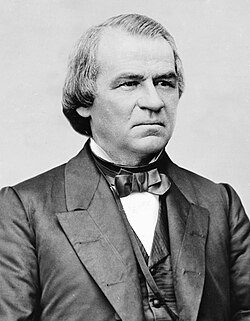
Andrew Johnson
head of state/government