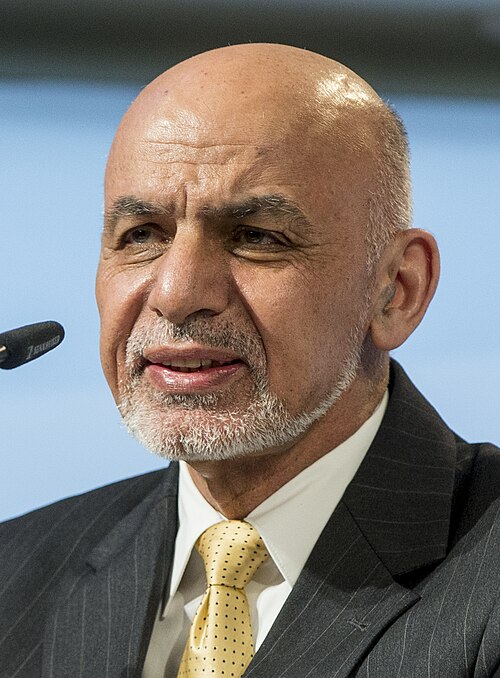
Ashraf Ghani
Afghan academic and former World Bank official who was President of Afghanistan from 2014 until he fled as the Taliban took Kabul in 2021.
Biography
Ashraf Ghani was born in 1949 in Logar Province into the Ahmadzai Pashtun tribe. He went to school in Kabul, spent a year as an exchange student in Oregon, and earned a bachelor's degree from the American University of Beirut in 1973. After teaching at Kabul University he went to Columbia University on a government scholarship; the 1978 communist coup, which led to the imprisonment of many of his male relatives, kept him in the United States, and he completed a doctorate in cultural anthropology in 1983.
He taught briefly at Berkeley and then at Johns Hopkins University until 1991, when he joined the World Bank as an anthropologist and later worked on its social policy and reform programmes. Returning to Afghanistan in December 2001 after 24 years abroad, he advised the UN envoy Lakhdar Brahimi on the Bonn Agreement and served as finance minister in Hamid Karzai's transitional government from 2002 to 2004, introducing a new currency and overhauling the treasury and customs. He was chancellor of Kabul University from 2004 to 2008 and co-founded the Institute for State Effectiveness.
Ghani came fourth in the 2009 presidential election, then chaired the commission overseeing the handover of security from NATO to Afghan forces until 2013. He won the disputed 2014 presidential election after a US-brokered deal that made his rival Abdullah Abdullah chief executive, and was declared winner again after the 2019 election. As president he pursued a technocratic agenda, regional trade links and peace talks with the Taliban, but faced criticism over corruption and his handling of the war.
On 15 August 2021, as the Taliban entered Kabul, Ghani left the country and took refuge in the United Arab Emirates. He said he had left to avoid bloodshed and denied accusations that he took large sums of money; a 2022 US inspector-general report found those claims unlikely to be true.
Offices held
Affiliations
Education
- Jan 1, 1977 – Jan 1, 1983 Columbia University MA 1977 and PhD in cultural anthropology 1983
- Stanford University
- American University of Beirut BA in political studies, 1973
- Harvard University
- Harvard Business School
- Kabul University
Employment
- Jan 1, 1983 – Jan 1, 1991 Johns Hopkins University associate professor of anthropology
- Jan 1, 1991 – Dec 1, 2001 World Bank lead anthropologist, then social policy; left on returning to Afghanistan in December 2001


.jpg)