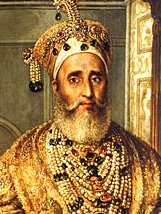
Bahadur Shah Zafar
October 24, 1775 – November 7, 1862
Last Mughal emperor, a poet who became the symbolic leader of the Indian Rebellion of 1857 and was exiled to Rangoon by the British.
Biography
Bahadur Shah II, known by his pen name Zafar, was born in 1775, the second son of the Mughal emperor Akbar II. He was not his father's preferred heir, but succeeded him in September 1837 after a rival half-brother was exiled by the East India Company. By then the Mughal emperor was a pensioner of the Company whose real authority hardly reached beyond the walled city of Delhi.
Zafar was a devout Sufi, a calligrapher and an accomplished Urdu poet, and his court was a centre of Urdu literature where Mirza Ghalib, Zauq and Daagh Dehlvi gathered. He observed Hindu festivals at court and showed little interest in statecraft.
When mutinous sepoys reached Delhi in May 1857 they turned to him as their figurehead. Hesitant at first, he gave public support to the rising, though he had little control over the rebel troops. As British forces retook the city in September 1857 he sheltered at Humayun's Tomb, where he surrendered on 20 September; the next day two of his sons and a grandson were shot by his captor, William Hodson.
The British tried him at the Red Fort on charges arising from the rebellion. Spared execution, he was exiled with his wife Zeenat Mahal and remaining family to Rangoon in Burma, where he died in November 1862, ending the Mughal line.
Offices held
Family
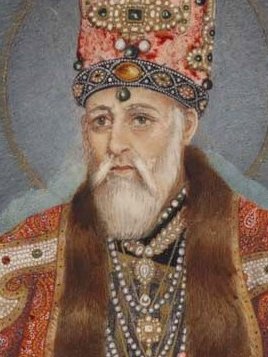 Bahadur Shah Zafar
