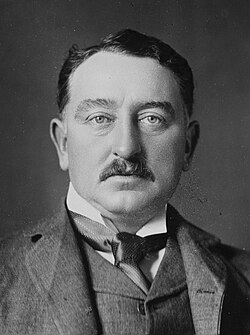
Cecil Rhodes
British mining magnate and Prime Minister of the Cape Colony who drove British expansion in southern Africa. Rhodesia was named after him.
Biography
Cecil Rhodes was born in 1853 in Bishop's Stortford, Hertfordshire, the son of a vicar. Sent to southern Africa for his health at seventeen, he joined the diamond diggings at Kimberley in 1871 and, with Charles Rudd and later Rothschild financing, steadily bought up rival claims. Between spells in Africa he studied at Oriel College, Oxford, from 1873. In 1888 he launched De Beers Consolidated Mines, which came to control nearly the whole world diamond supply.
Rhodes entered the Cape Parliament for Barkly West in 1881 and became Prime Minister of the Cape Colony in 1890. His government tripled the property qualification for voting and passed the Glen Grey Act of 1894, measures that sharply curtailed the land and voting rights of black Africans. Armed with the Rudd Concession of 1888 and a royal charter for his British South Africa Company in 1889, he pushed British rule north of the Limpopo; the company named the territories Rhodesia in 1895.
His backing of the failed Jameson Raid against the Transvaal forced him to resign as premier in January 1896. He helped negotiate the end of the Ndebele rising later that year and was in Kimberley during its siege in the Second Boer War. He died at Muizenberg in 1902, leaving much of his fortune to fund the Rhodes Scholarships at Oxford. His seizure of African land and his racial views have made his legacy a subject of debate.
Offices held
Gordon Sprigg Succeeded by
Gordon Sprigg
Affiliations
Education
- from Jan 1, 1873 Oriel College, Oxford Admitted 1873; studied in intervals, returning in 1876


