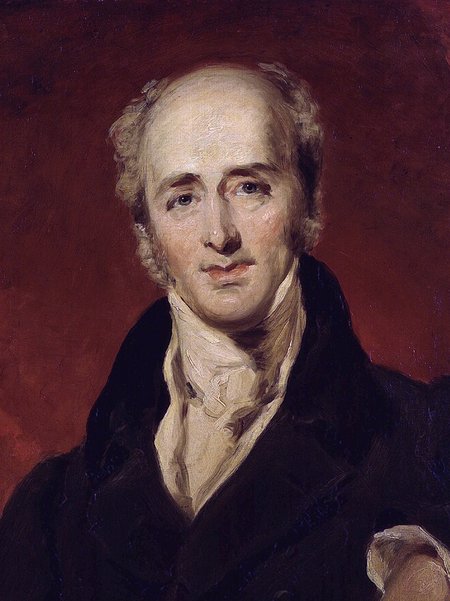
Charles Grey, 2nd Earl Grey
March 13, 1764 – July 17, 1845
Prime Minister of the United Kingdom from 1830 to 1834 (1764–1845)
Biography
Charles Grey was born at Fallodon, Northumberland, in 1764, the eldest surviving son of a general later made Earl Grey. He was educated at Eton and Trinity College, Cambridge, and while on the Grand Tour in 1786 his uncle secured his election as MP for Northumberland. In London he joined the Whigs around Charles James Fox, and in 1792 he helped found the Society of the Friends of the People, moving motions for parliamentary reform in 1793 and 1797 that were heavily defeated.
In the Ministry of All the Talents he was First Lord of the Admiralty in 1806 and, after Fox's death, foreign secretary and leader of the House of Commons. He made the principal Commons speech for abolishing the slave trade in February 1807. When his father died that November he entered the House of Lords as the 2nd Earl Grey and led the Whigs through almost 24 years in opposition, helping carry Catholic emancipation through the Lords in 1829.
William IV invited him to form a government in November 1830. Grey's ministry pushed parliamentary reform through two failed bills and a general election in 1831 to pass the Reform Act 1832, which redistributed seats and widened the franchise, and then enacted the Slavery Abolition Act 1833.
He resigned in July 1834 after cabinet disagreements over Ireland and retired to Howick Hall, where he died in 1845. He and his wife Mary Ponsonby had fifteen children; Earl Grey tea bears his name, though he probably had nothing to do with it.
Offices held
Henry Dundas, 1st Viscount Melville Succeeded by
Henry Phipps, 1st Earl of Mulgrave
2 terms
- Jan 1, 1806 – Jan 1, 1806 Preceded by Henry Dundas, 1st Viscount Melville
- Feb 11, 1806 – Sep 24, 1806 Succeeded by Henry Phipps, 1st Earl of Mulgrave
Arthur Wellesley, 1st Duke of Wellington Succeeded by
William Lamb, 2nd Viscount Melbourne
Affiliations
Education
- from Jan 1, 1781 Trinity College, Cambridge left without a degree, as was common
- Eton College
