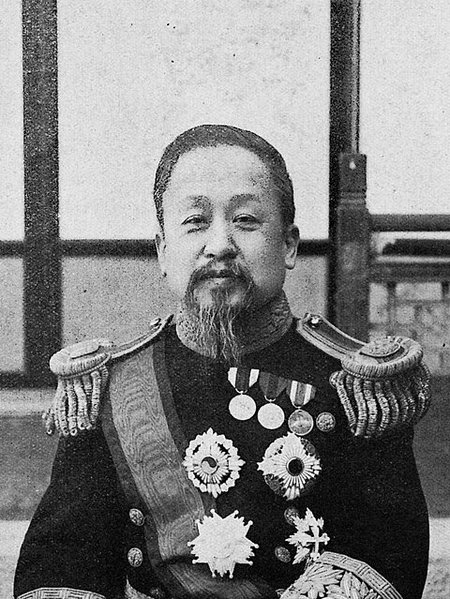
Gojong of the Korean Empire
September 8, 1852 – January 21, 1919
26th king of Joseon; 1st emperor of Korea
Biography
Gojong, born Yi Jaehwang in 1852 to a distant branch of the royal house, came to the throne of Joseon at eleven in 1864 after the heirless King Cheoljong died. His father, the Heungseon Daewongun, governed as regent, enforcing strict isolation and persecuting Catholics, until Gojong took direct rule in 1873, after which Queen Min and her clan dominated the court.
Japan forced Korea open with the 1876 treaty, and Gojong's reign became a struggle among Japan, Qing China and later Russia. He survived the Imo Incident of 1882 and the Kapsin Coup of 1884, called on Chinese and Japanese troops against the Tonghak rebels in 1894, and lost his queen to Japanese assassins in 1895. In February 1896 he fled with the crown prince to the Russian legation in Seoul and governed from there for a year.
After returning to the palace he proclaimed the Korean Empire in October 1897, taking the title of emperor and the era name Gwangmu, and launched modernising reforms, though he suppressed the Independence Club in 1898. Following Japan's victory over Russia, Korea lost control of its foreign affairs under the 1905 treaty, which Gojong refused to sign. His secret dispatch of envoys to the Hague Peace Conference in 1907 gave Japan the pretext to force his abdication in favour of his son Sunjong. Confined to Deoksugung, he died on 21 January 1919 amid lasting suspicions that he had been poisoned.
Offices held
Family
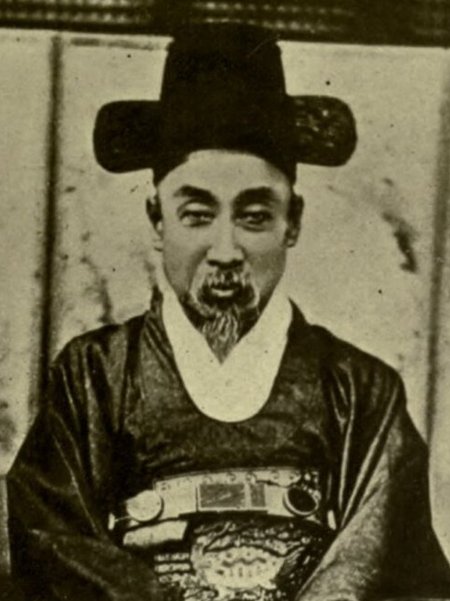 Gojong of the Korean Empire
Empress Myeongseong
Gwiin Jeong
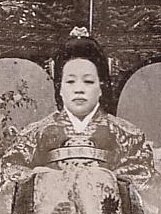 Imperial Noble Consort Sunheon
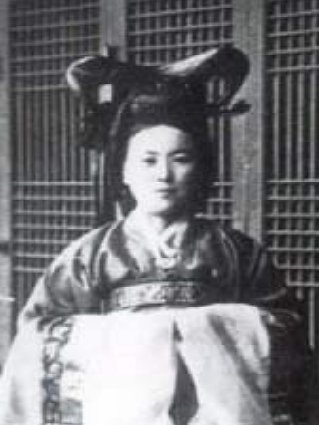 Gwiin Yang