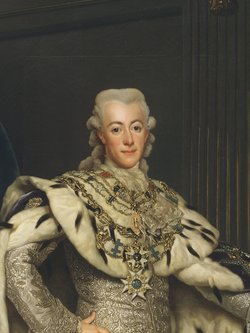
Gustav III
January 24, 1746 – March 29, 1792
King of Sweden from 1771 who restored royal power in a coup and was shot at a masked ball in Stockholm.
Biography
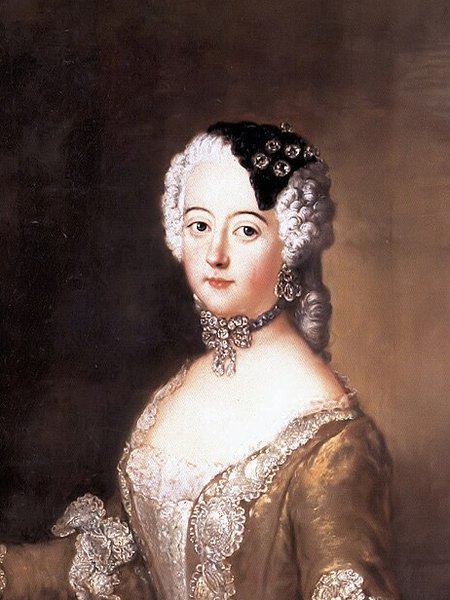
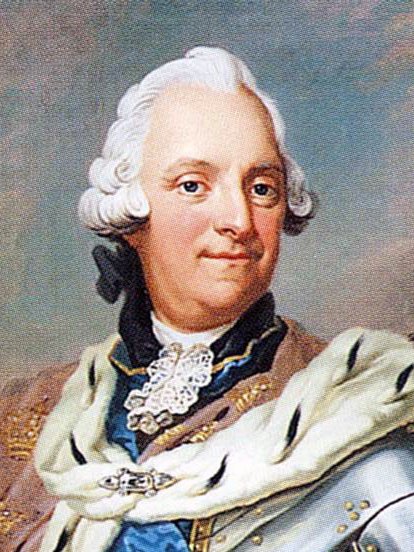
Gustav III was born in Stockholm in 1746, the eldest son of King Adolf Frederick and Queen Louisa Ulrika, and was educated under the statesmen Carl Gustaf Tessin and Carl Fredrik Scheffer and the poet Olof von Dalin. He married Princess Sophia Magdalena of Denmark in 1766. As crown prince he tried during the December Crisis of 1768 to force a reform of the constitution, and in early 1771 he visited Paris, where the French court promised Sweden its subsidies; he became king that year.
A Riksdag dominated by the quarrelling Hat and Cap parties left the crown with little power. On 19 August 1772 Gustav carried out a bloodless coup, arresting the Privy Council, and two days later the estates accepted a new Instrument of Government that ended the Age of Liberty. In the following years he limited torture and the death penalty, stabilised the currency, freed the grain trade and granted Catholics and Jews limited freedom of worship, while later amendments curbed the freedom of the press.
In 1788 he went to war with Russia without the consent of the estates, and aristocratic officers answered with the Anjala mutiny. Turning popular anger against the nobility, he had the three lower estates pass the Union and Security Act in February 1789, which strengthened royal power further. The war ended in 1790, soon after the Swedish naval victory at Svensksund.
Gustav was a playwright and a generous patron of the arts: he founded the Royal Swedish Opera in 1773 and the Swedish Academy, and promoted Swedish actors and singers. Noble conspirators shot him at a masked ball in the Stockholm opera house on 16 March 1792, and he died of the wound thirteen days later.
Offices held
Adolf Frederick of Sweden Succeeded by
Gustav IV Adolf