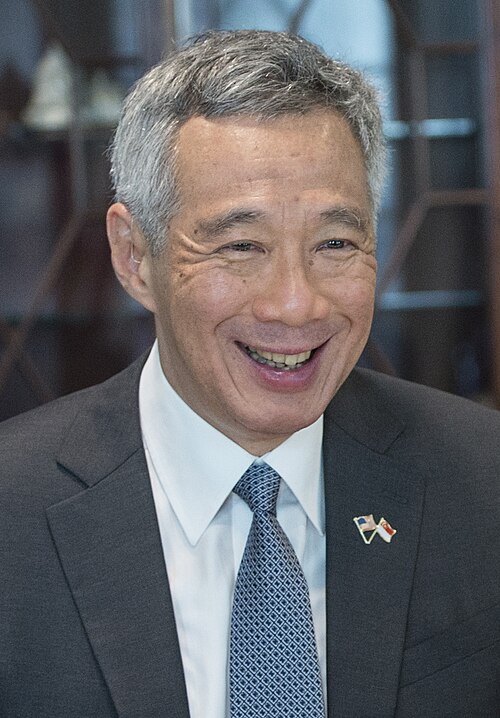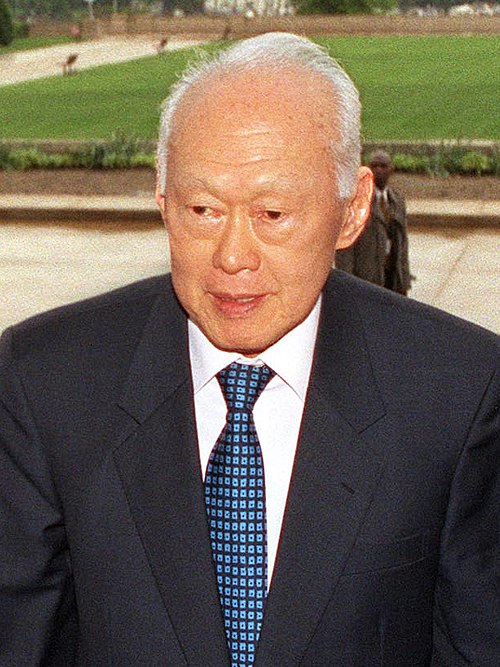
Lee Kuan Yew
September 16, 1923 – March 23, 2015
Founding Prime Minister of Singapore, from 1959 to 1990, who turned the city-state into a wealthy trading and financial centre.
Biography
Lee Kuan Yew was born in colonial Singapore in 1923 to a Peranakan Chinese family. He studied at Raffles Institution and Raffles College, where the Japanese invasion cut short his studies, and after the war went to England, briefly at the London School of Economics and then reading law at Fitzwilliam, Cambridge, where he graduated with a starred first in 1949. He was called to the bar at the Middle Temple in 1950.
Back in Singapore he practised law and represented trade unions, and in 1954 co-founded the People's Action Party, becoming its secretary-general. Elected for Tanjong Pagar in 1955, he led the opposition until the PAP won the 1959 election, which made him Singapore's first prime minister.
Lee pursued merger with Malaya, winning a 1962 referendum on its terms and backing the 1963 Operation Coldstore detentions of left-wing opponents; Singapore joined Malaysia that year but was expelled in August 1965. As prime minister of the independent republic until 1990 he drove industrialisation, public housing and an anti-corruption, meritocratic civil service, while restricting the press, assembly and opposition through detention and defamation suits.
He remained in cabinet as senior minister and then minister mentor until 2011 and kept his seat until his death in March 2015, which was followed by a week of national mourning.
Offices held
Affiliations
Education
- from Jan 1, 1935 Raffles Institution
- Oct 1, 1946 – Nov 1, 1946 London School of Economics
- Jan 1, 1947 – Jan 1, 1949 Fitzwilliam College, Cambridge Law, starred first
- Raffles College Studies interrupted by the war
- University of London
- University of Cambridge
Party membership
Family
Lee Kuan Yew