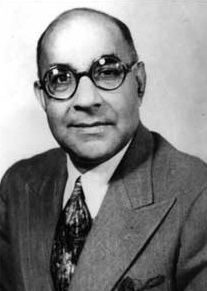
Liaquat Ali Khan
October 1, 1895 – October 16, 1951
Muslim League politician, first Prime Minister of Pakistan from 1947 until he was assassinated in Rawalpindi in 1951.
Biography
Liaquat Ali Khan was born in 1895 in Karnal, Punjab, into a wealthy landowning family. He studied at the Muhammadan Anglo-Oriental College in Aligarh, graduating in 1918, and read law at Exeter College, Oxford, from 1919 to 1921; he was called to the bar at the Inner Temple in 1922.
Returning to India, he joined the Muslim League and in 1926 was elected to the United Provinces Legislative Council, where he sat until 1940. In 1933 he and his wife helped persuade Muhammad Ali Jinnah to return from London and lead the League, and from 1936 he was its honorary general secretary, becoming Jinnah's closest lieutenant. He entered the Central Legislative Assembly in 1940 and led the League's members in the 1946 interim government as finance minister.
At independence in August 1947 he became Pakistan's first prime minister, also holding the foreign affairs, defence and frontier portfolios. He agreed to a UN-brokered ceasefire in Kashmir, steered the Objectives Resolution through the Constituent Assembly in 1949, signed the 1950 pact with Jawaharlal Nehru on the protection of minorities and leaned towards the United States. In 1951 his government uncovered the Rawalpindi conspiracy, a planned coup by army officers and leftist politicians.
On 16 October 1951 he was shot dead while addressing a rally in Rawalpindi by Said Akbar, an Afghan national; the motive was never established. He is honoured in Pakistan as Quaid-e-Millat and Shaheed-e-Millat.
Offices held
Affiliations
Education
- Jan 1, 1913 – Jan 1, 1918 Aligarh Muslim University Muhammadan Anglo-Oriental College (now Aligarh Muslim University); BSc and LLB 1918
- Jan 1, 1919 – Jan 1, 1921 Exeter College, Oxford law, 1921
Party membership
- Aug 14, 1947 – Oct 16, 1951 Muslim League (1947–1958)
- All-India Muslim League


