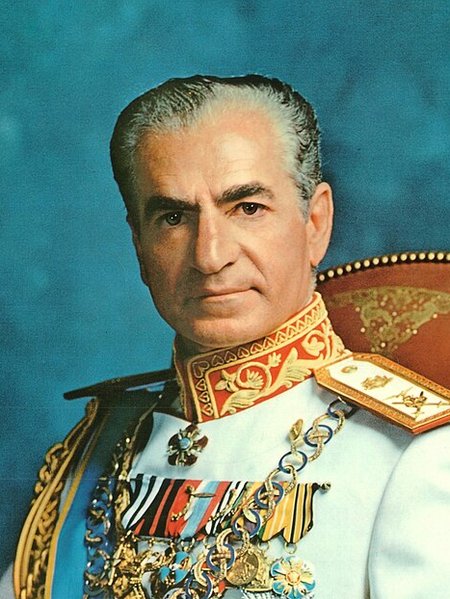
Mohammad Reza Pahlavi
October 26, 1919 – July 27, 1980
Last Shah of Iran (1941-1979), overthrown in the Iranian Revolution.
Biography
Mohammad Reza Pahlavi was born in Tehran in 1919, the son of Reza Shah, and became crown prince when his father was crowned in 1926. He was sent to the Institut Le Rosey boarding school in Switzerland in 1931, returned to Iran in 1936 and trained at the Madrasa Nezam military academy in Tehran. When British and Soviet forces invaded Iran in 1941 and forced his father to abdicate, he succeeded to the throne as the second and last shah of the Pahlavi dynasty.
His early reign was unsettled by the Iran crisis of 1946 and by a power struggle with prime minister Mohammad Mosaddegh, who nationalised the British-owned oil industry. Mosaddegh was removed in the 1953 coup, carried out by royalist forces with British and American backing, after which the shah ruled with growing personal authority and suppressed his opponents. In 1963 he launched the White Revolution, a programme of land reform and economic and social modernisation, and Iran's economy grew rapidly over the following decade. With American support he built up the strongest military in the Persian Gulf, and in 1975 he settled border disputes with Iraq in the Algiers Agreement. That same year he replaced the party system with a single state party, Rastakhiz.
Economic strains, inequality and political repression fed mounting discontent. Protests that began in January 1978 grew into a nationwide revolution, and on 16 January 1979 the shah left Iran; the monarchy collapsed within weeks and Ruhollah Khomeini founded the Islamic Republic. He moved between several countries in exile and died in Cairo in July 1980. His rule is remembered both for rapid modernisation and for widespread human rights abuses.
Offices held
Affiliations
Education
- Jan 1, 1931 – Jan 1, 1936 Institut Le Rosey Swiss boarding school
- Madrasa Nezam military academy in Tehran, after 1936
Family
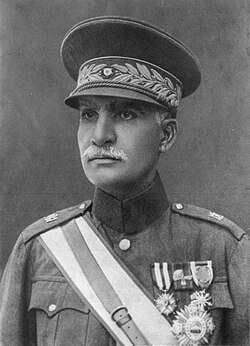 Mohammad Reza Pahlavi


