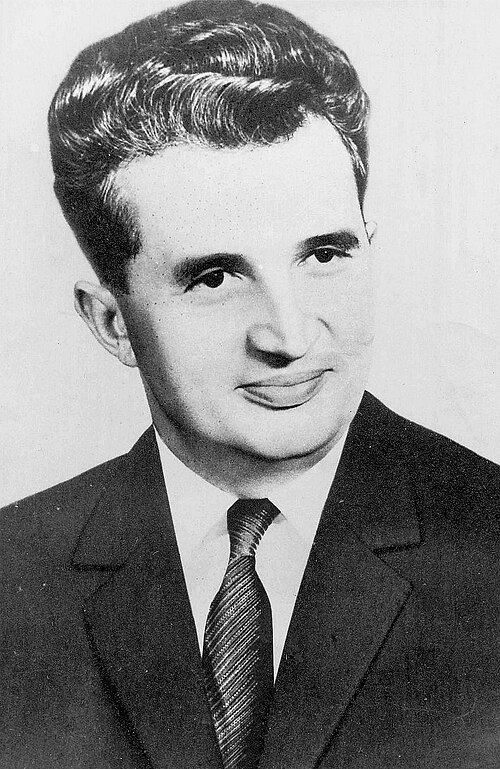
Nicolae Ceaușescu
January 26, 1918 – December 25, 1989
Communist leader of Romania from 1965 until he was overthrown and executed in the 1989 revolution.
Biography
Nicolae Ceausescu was born in Scornicesti in 1918 and, as an apprentice shoemaker, joined the then illegal Communist Party as a teenager. He was jailed several times in the 1930s and during the war for communist agitation, spending time in Doftana prison.
After the communists took power he became a member of the national assembly and from 1948 held posts in the agriculture ministry and then as deputy minister over the armed forces. A protege of Gheorghe Gheorghiu-Dej, he joined the Central Committee in 1952 and succeeded Gheorghiu-Dej as party leader in March 1965, adding the presidency of the State Council in 1967 and the new office of President of the Republic in 1974.
His public condemnation of the 1968 Warsaw Pact invasion of Czechoslovakia won him popularity at home and in the West, but his July Theses of 1971 began a return to hard-line control and a growing personality cult. The Securitate watched and repressed the population, his birth policy filled orphanages, and austerity to pay off foreign debt brought severe shortages, provoking the 1987 Brasov revolt.
In December 1989 he ordered troops to fire on protesters in Timisoara. As the revolt spread to Bucharest he and his wife Elena fled by helicopter, were captured, and after a summary military trial were shot on 25 December 1989.
Offices held
Military service
Affiliations
Party membership
- Jan 1, 1932 – Jan 1, 1989 Romanian Communist Party

