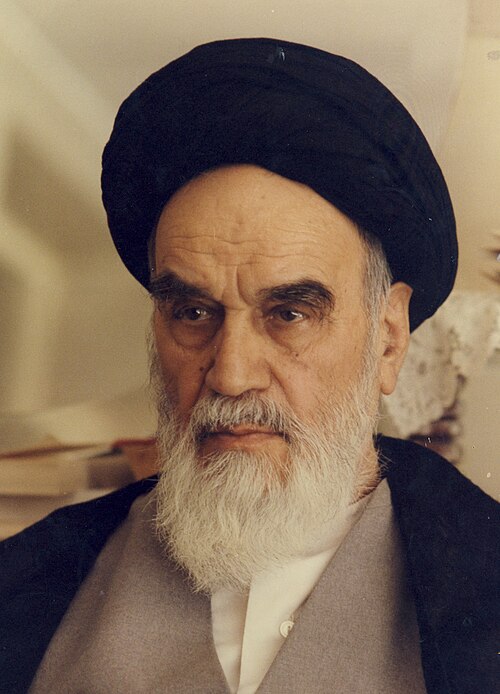
Ruhollah Khomeini
September 24, 1902 – June 3, 1989
Iranian Shia cleric who led the 1979 Iranian Revolution and was the first Supreme Leader of the Islamic Republic of Iran from 1979 until his death in 1989.
Biography
Ruhollah Khomeini was born in Khomeyn in central Iran; his birth certificate gives 17 May 1900, while his brother put it at 24 September 1902. His father was killed when he was an infant and he was raised by his mother and aunt. He began religious studies in Arak under Abdolkarim Haeri Yazdi and in the early 1920s followed him to the seminary at Qom, where he later taught political philosophy, Islamic history and ethics and became a senior ayatollah.
In 1963 he denounced Mohammad Reza Shah's White Revolution, and his arrest that June set off days of riots across Iran. After a further attack on the Shah and the United States in October 1964 he was expelled to Turkey, and about a year later he settled in Najaf in Iraq. His lectures there on the guardianship of the Islamic jurist were published as Islamic Government.
Khomeini returned to Tehran on 1 February 1979, two weeks after the Shah left the country, and the monarchy fell ten days later. He led the state as Leader of the Revolution and, after a referendum approved the Islamic Republic, became its first Supreme Leader in December 1979. He backed the students who seized the US embassy, led Iran through the war with Iraq, and presided over severe repression, including the mass executions of political prisoners in 1988 that followed his religious edict.
In February 1989 he issued a fatwa calling for the death of the novelist Salman Rushdie over The Satanic Verses. He died in Tehran in June 1989, and his funeral was attended by up to ten million people.
Offices held
Affiliations
Education
- from Jan 1, 1921 Qom Seminary Studied and later taught at the Qom seminary
Party membership
- Jan 1, 1979 – Jan 1, 1987 Islamic Republican Party


