Biography
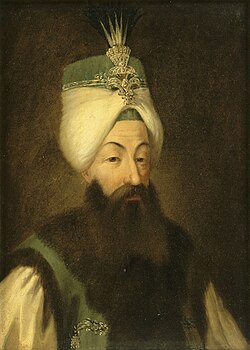
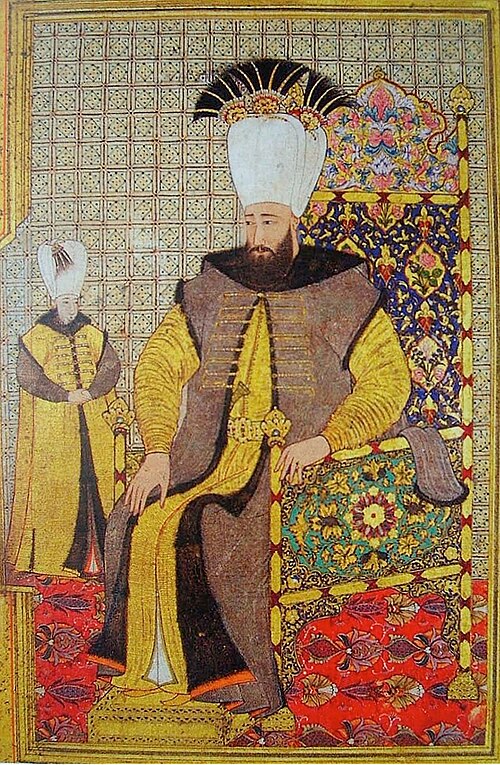
Abdul Hamid was born in Constantinople in 1725, a son of Sultan Ahmed III. As a potential heir he was confined in comfort within the palace by his reigning relatives until 1767, and his early education in history and calligraphy came from his mother.
He succeeded his brother Mustafa III on 21 January 1774, in the middle of a losing war with Russia, and found the treasury so empty that the customary accession payment to the Janissaries could not be made. After the defeat at Kozludzha the empire accepted the Treaty of Küçük Kaynarca in July 1774, which ceded territory, made Crimea nominally independent and gave Russia a voice on behalf of the sultan's Orthodox Christian subjects. Crimea soon fell under Russian control.
A devout and peaceable ruler, he tried to reform the Janissaries and the navy, founded a new artillery corps and is credited with creating the naval engineering school. His commanders, among them Gazi Hasan Pasha, suppressed rebellions in Syria, Egypt and the Morea. He personally directed firefighters during the Constantinople fire of 1782 and built mosques, fountains, a madrasa and a library in the capital.
The empire went to war with Russia again in 1787, and Austria soon joined against it. On hearing that Ochakov had fallen in December 1788 he suffered a stroke, and he died on 7 April 1789. Selim III succeeded him; two of his own sons later reigned as Mustafa IV and Mahmud II.
Offices held
Family
 Abdul Hamid I