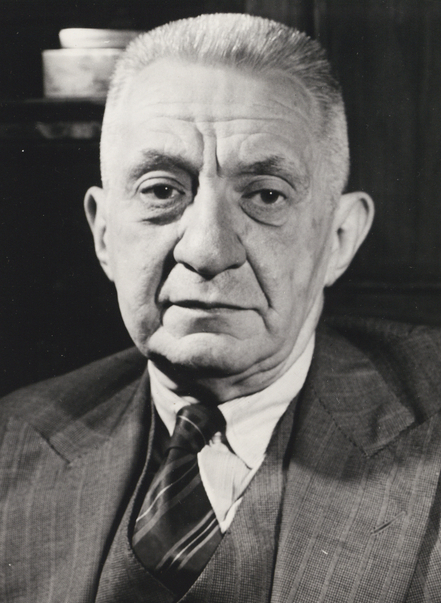
Alexander Kerensky
Russian lawyer and socialist politician who led the Russian Provisional Government in 1917 until the Bolsheviks overthrew it in the October Revolution.
Biography
Alexander Kerensky was born in Simbirsk in 1881, the son of a schoolteacher and gymnasium director who had once taught the young Lenin. The family moved to Tashkent in 1889. He entered St. Petersburg University in 1899, switched from history and philology to law, and graduated in 1904. Drawn to the Narodnik movement, he made his name as a defence lawyer in political trials after the 1905 revolution.
In 1912 he gained wide attention by investigating and publicizing the Lena goldfields massacre, and that year he was elected to the Fourth Duma for the Trudoviks, a labour group close to the Socialist Revolutionaries. In the Duma he became a leading voice against the monarchy, denouncing the tsar's ministers and Rasputin in November 1916.
During the February Revolution of 1917 he was both vice-chairman of the Petrograd Soviet and a member of the Duma committee, and he joined the Provisional Government as minister of justice. In May he became minister of war and navy and toured the front to rally the troops before the failed summer offensive that took his name. After the July Days he succeeded Prince Lvov as head of the government, and after the Kornilov affair he also made himself supreme commander. He proclaimed Russia a republic in September, but his decision to stay in the war and his weakening hold on the army left the government with little support when the Bolsheviks seized Petrograd in November.
His attempt to retake the capital with loyal troops failed at Pulkovo, and he went into hiding and then into exile, opposing both the Bolsheviks and the Whites. He lived in Paris, briefly in Australia and finally in the United States, where he worked at Stanford's Hoover Institution, taught and wrote on Russian history. He died in New York in 1970 and was buried in London.
Offices held
Affiliations
Education
- Jan 1, 1899 – Dec 31, 1904 Saint Petersburg State University History and philology from 1899, then law; law degree 1904
Party membership
- from Jan 1, 1912 Trudoviks Elected to the Fourth Duma as a Trudovik in 1912; led the faction
- Socialist Revolutionary Party
Employment
- Hoover Institution In later life worked at the Hoover Institution, Stanford, using and adding to its archive and teaching graduate courses


