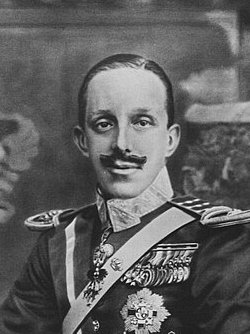
Alfonso XIII
May 17, 1886 – February 28, 1941
King of Spain from his birth in 1886 until he left the country in 1931, when the Second Spanish Republic was proclaimed.
Biography
Alfonso XIII was born in the Royal Palace of Madrid in May 1886, king from birth because his father Alfonso XII had died months earlier. His mother, Maria Christina of Austria, ruled as regent until he came of age in 1902; during the regency Spain lost Cuba, Puerto Rico and the Philippines in the war with the United States. Raised in a military atmosphere, he liked to present himself as a soldier-king.
His wedding to Victoria Eugenie of Battenberg in 1906 was marked by an anarchist bomb attack on the royal procession that killed many bystanders but left the couple unharmed. Alfonso played an active and often controversial political role. He helped keep Spain neutral in the First World War, setting up an office to assist prisoners of war on all sides, for which he was nominated for the Nobel Peace Prize in 1917.
The Restoration system decayed through the crises of 1917 and the war in Morocco, and in 1923 Alfonso accepted Miguel Primo de Rivera's coup and dictatorship. After withdrawing his support from Primo de Rivera in 1930 he tried to return to constitutional rule, but republican victories in the municipal elections of April 1931 led to the proclamation of the Second Republic, and he left Spain. He died in exile in Rome in 1941.
Offices held
Military service
Family
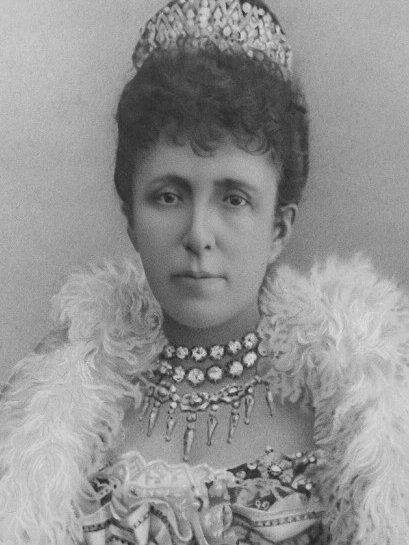 Alfonso XIII
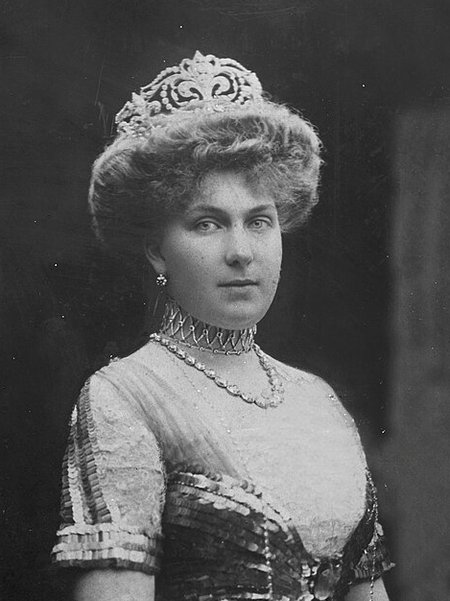 Victoria Eugenie of Battenberg