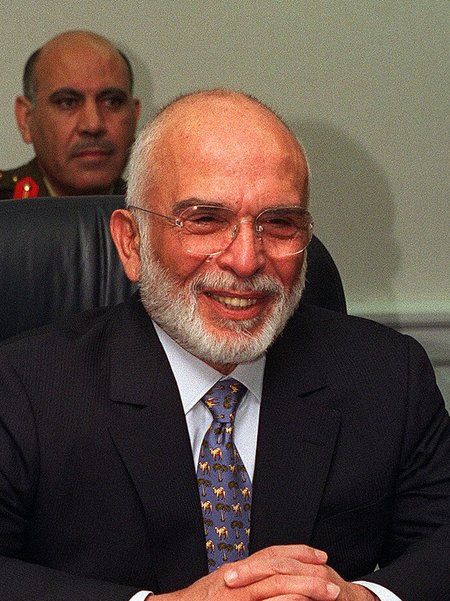
Hussein I of Jordan
November 14, 1935 – February 7, 1999
King of Jordan from 1952 to 1999, who ruled through the Arab-Israeli wars and signed a peace treaty with Israel in 1994.
Biography
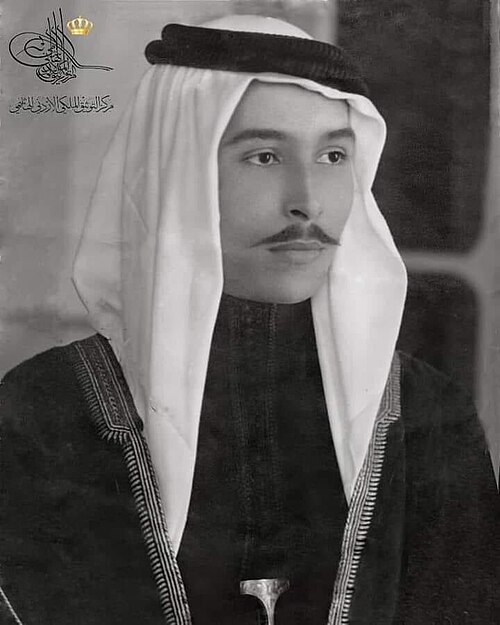
Hussein bin Talal was born in Amman in 1935, the eldest son of Crown Prince Talal, and belonged to the Hashemite dynasty. He was educated in Amman, at Victoria College in Alexandria and at Harrow School in England. When his father was forced to abdicate on grounds of mental illness in 1952, Hussein became king, and after further study at Sandhurst he was enthroned on reaching his majority in May 1953.
Early in his reign Hussein allowed Jordan's only freely elected government in 1956 but forced it out within months, imposing martial law and banning parties. Jordan lost the West Bank and East Jerusalem in the 1967 Six-Day War, and in 1970-71 Hussein's army expelled Palestinian militant groups in the conflict known as Black September. In 1988 he gave up Jordan's claims to the West Bank in favour of the PLO, and in 1989 he restored elections after riots over price rises.
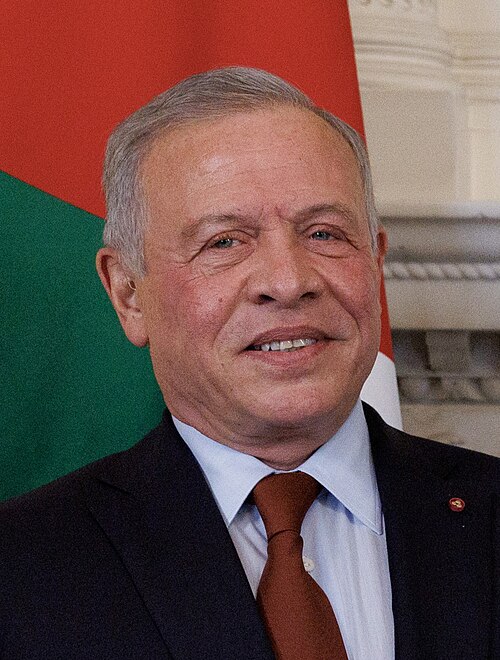
Hussein survived many assassination and coup attempts and became known as a regional mediator. In 1994 he signed the Washington Declaration with Yitzhak Rabin and then a peace treaty with Israel, making Jordan the second Arab state to do so. He was married four times and had eleven children. He died of cancer in February 1999 and was succeeded by his son Abdullah II.
Offices held
Talal I of Jordan Succeeded by
Abdullah II of Jordan