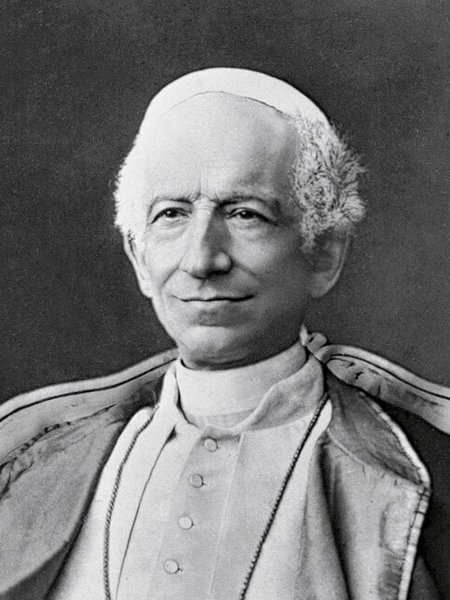
Leo XIII
Italian pope from 1878 to 1903 whose encyclical Rerum novarum founded modern Catholic social teaching.
Biography
Leo XIII was born Gioacchino Pecci in 1810 at Carpineto Romano, near Rome. He studied diplomacy and law at the Academia dei Nobili in Rome, was ordained a priest at the end of 1837, and served Pope Gregory XVI as papal governor first of Benevento and then of Perugia, where he worked against banditry and corruption and reformed local finances.
In 1843 he was made an archbishop and sent as apostolic nuncio to Belgium. Three years later he became archbishop-bishop of Perugia, a see he held for over three decades; Pius IX made him a cardinal in 1853, and in 1877 he became camerlengo of the Apostolic Chamber. After Pius IX died, the conclave of February 1878 elected Pecci on its third ballot, and he took the name Leo XIII.
Leo was the first pope in more than a thousand years to reign without the Papal States, and much of his policy tried to deal with the loss of temporal power. He issued 86 encyclicals, revived the study of Thomas Aquinas, and in Rerum novarum (1891) defended workers' rights to fair wages and trade unions while upholding private property and rejecting both socialism and unrestrained capitalism, laying the foundation of modern Catholic social teaching. He also wrote extensively on the rosary. He died in Rome in 1903 at the age of 93, after one of the longest pontificates in history.