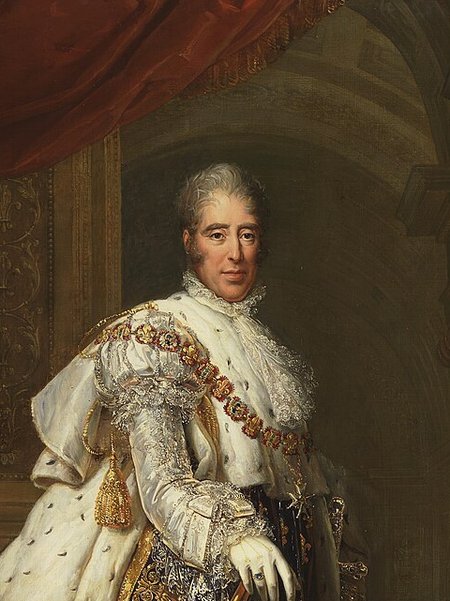
Charles X of France
October 9, 1757 – November 6, 1836
King of France from 1824 to 1830, the last Bourbon king, overthrown in the July Revolution.
Biography
Charles X was born at Versailles in 1757, a grandson of Louis XV, and was known as the Count of Artois; his elder brothers became Louis XVI and Louis XVIII. He married Marie Thérèse of Savoy in 1773. During the Revolution and the Napoleonic era he lived in exile and backed his brother's claim to the throne.
After the Bourbon Restoration of 1814, Charles, as heir presumptive, led the ultra-royalists, who wanted to restore divine-right monarchy and opposed the liberal Charter of 1814. His influence grew after his son, the Duke of Berry, was assassinated in 1820, and he succeeded Louis XVIII in September 1824.
Crowned at Reims in 1825, the last French coronation, Charles revived old royal rituals. His governments compensated former landowners for losses from the abolition of feudalism, strengthened the Catholic Church and made sacrilege a capital crime, bringing them into conflict with the liberal Chamber of Deputies. He forced Haiti to pay a large indemnity in exchange for recognition and approved the invasion of Algeria. When the ministry of Prince Jules de Polignac lost the 1830 elections, he issued the July Ordinances dissolving the chamber, narrowing the franchise and restoring censorship. The July Revolution followed within days; he abdicated, Louis Philippe became King of the French, and Charles died in exile at Gorizia in 1836.
Offices held
Family
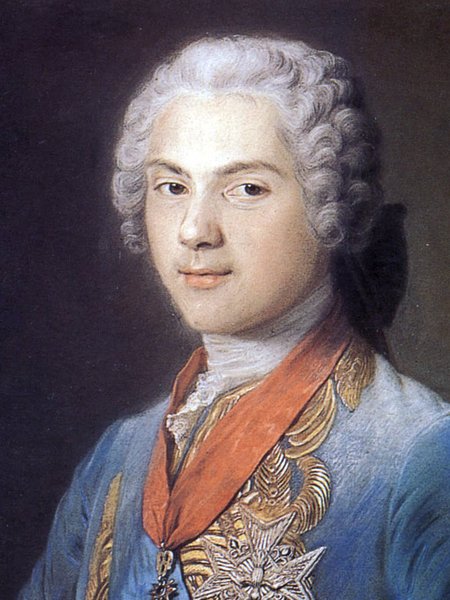 Charles X of France


