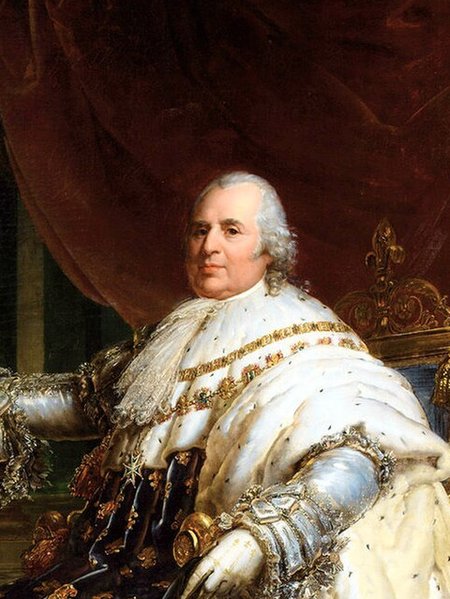
Louis XVIII
November 17, 1755 – September 16, 1824
King of France from the Bourbon Restoration in 1814 until his death in 1824, except for Napoleon's Hundred Days in 1815.
Biography
Louis Stanislas Xavier, Count of Provence, was born at Versailles in 1755, a younger brother of the future Louis XVI. When the royal family attempted its flight to Varennes in June 1791, he and his wife escaped separately to the Austrian Netherlands, beginning 23 years of exile. He proclaimed himself regent, endorsed the Declaration of Pillnitz, and after his young nephew Louis XVII died in prison in 1795 took the title of king, setting out his programme in the Declaration of Verona.
He lived in exile in Prussia, Russia and Britain. When the Sixth Coalition defeated Napoleon in 1814 he returned to the throne and granted the Charter of 1814, which made France a constitutional monarchy and limited royal power. Napoleon's escape from Elba in March 1815 forced him to flee to Ghent, and he was restored again after the Seventh Coalition defeated Napoleon.
His second return brought a wave of White Terror led by the Ultra-royalists. In 1816 he dissolved the reactionary Chambre introuvable, opening the way for the moderate liberal Doctrinaires, and his reign later saw France join the Quintuple Alliance and intervene militarily in Spain. He died childless in 1824 and was succeeded by his brother Charles X; he was the last French monarch to die on the throne.
Offices held
Napoleon Succeeded by
Charles X of France
2 terms
- Apr 6, 1814 – Mar 20, 1815 Preceded by Napoleon Succeeded by Napoleon
- Jul 8, 1815 – Sep 16, 1824 Preceded by Napoleon Succeeded by Charles X of France
Family
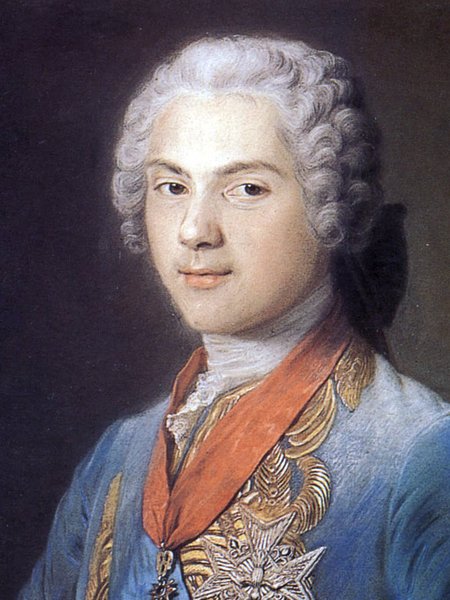 Louis XVIII


