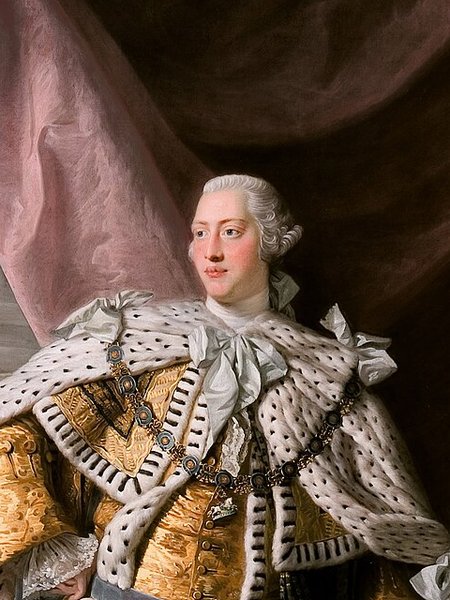
George III
June 4, 1738 – January 29, 1820
King of Great Britain and Ireland (1760-1820) during the American Revolution and the Napoleonic Wars; his son ruled as regent in his last decade.
Biography
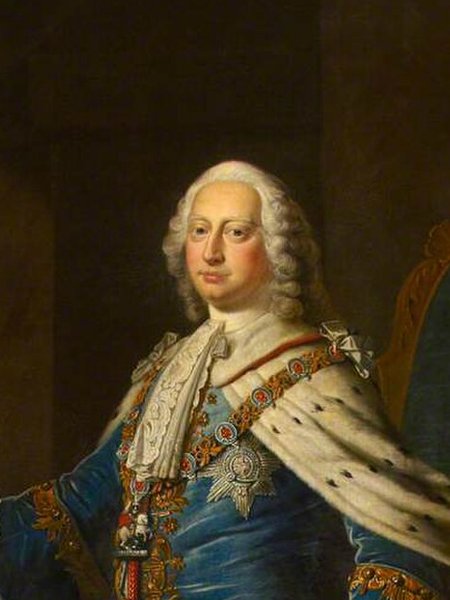
George III was born in London in 1738, the son of Frederick, Prince of Wales, and grandson of George II. He became heir to the throne when his father died in 1751 and succeeded his grandfather in October 1760. The next year he married Princess Charlotte of Mecklenburg-Strelitz, and they had fifteen children. He was the first Hanoverian king born in Britain and to speak English as his first language, and he never visited Hanover.
Early in his reign Britain won the Seven Years' War and became the leading European power in North America and India, but it lost thirteen American colonies in the War of Independence. In 1783, after the Fox–North coalition's India Bill was defeated in the Lords, he dismissed that government and appointed William Pitt the Younger as prime minister. Long wars with revolutionary and Napoleonic France followed from 1793 and ended with Napoleon's defeat at Waterloo in 1815. The Acts of Union 1800 joined Great Britain and Ireland into a single kingdom from 1 January 1801, and the British slave trade was abolished in 1807. In 1814 his Hanoverian territory became a kingdom.
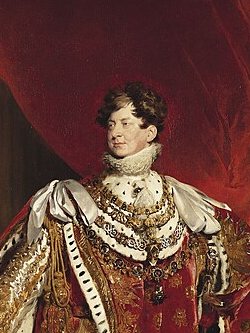
In later life George suffered repeated bouts of mental illness, possibly bipolar disorder or porphyria. After a final relapse in 1810 he accepted the Regency Act 1811, and his eldest son ruled as Prince Regent for the rest of his life. He died in January 1820 after a reign of 59 years and 96 days, still the longest of any male British monarch.
Offices held
2 terms
- Oct 25, 1760 – Dec 31, 1800 Great Britain Preceded by George II
- Jan 1, 1801 – Jan 29, 1820 United Kingdom Succeeded by George IV