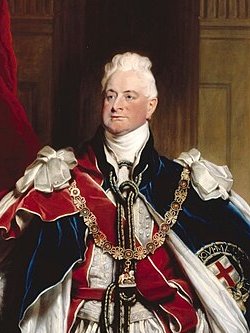
William IV
August 21, 1765 – June 20, 1837
King of the United Kingdom (1830-1837) whose reign saw the Great Reform Act of 1832 and the abolition of slavery in most of the British Empire.
Biography
William IV was born in 1765, the third son of George III. He joined the Royal Navy as a youth and served in North America and the Caribbean, which later earned him the nickname Sailor King. Created Duke of Clarence and St Andrews in 1789, he lived from 1791 to 1811 with the actress Dorothea Jordan, with whom he had ten children, and in 1818 married Princess Adelaide of Saxe-Meiningen. In 1827 George Canning made him Lord High Admiral, the first since 1709, but he left the post in 1828 after taking a squadron to sea without telling anyone where it was going.
As his elder brothers left no legitimate heirs, he succeeded George IV in June 1830 at the age of 64. When the Lords blocked electoral reform, he first resisted Lord Grey's request to create new peers, then in the Days of May of 1832 agreed to do so if needed, which ensured the passage of the Reform Act 1832. His reign also saw the abolition of slavery in most of the British Empire, limits on child labour and a new Poor Law, and in 1834 he became the last British monarch to choose a prime minister against the will of Parliament.
In Hanover he granted a short-lived liberal constitution. He died in June 1837 with no surviving legitimate children; his niece Victoria succeeded him in Britain and his brother Ernest Augustus in Hanover, ending the union of the two crowns.
Offices held
George IV Succeeded by
Ernest Augustus of Hanover
Military service
Family
 William IV


