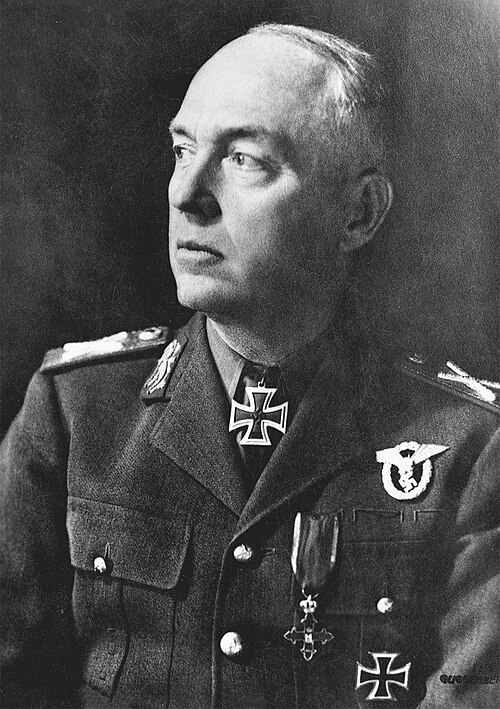
Ion Antonescu
Romanian marshal and dictator who allied Romania with Nazi Germany, led it in the Second World War, and was executed for war crimes in 1946.
Biography
Ion Antonescu was born in Pitești in 1882 into a family with a military tradition, attended the Infantry and Cavalry School in Craiova and was commissioned in the Romanian Army in 1904. He led a cavalry unit in the suppression of the 1907 peasants' revolt, studied at the Advanced War School from 1911 to 1913 and was a staff officer in the Second Balkan War. In the First World War he served as chief of staff to General Constantin Prezan and then as head of operations, helping to organise the defence of Moldavia in 1917.
Between the wars he was military attaché in Paris from 1922, deputy chief and then, in 1933-1934, Chief of the General Staff, a post he lost after clashing with King Carol II. He was Minister of War in the Goga and Cristea cabinets of 1937-1938 but resigned over the arrest of the Iron Guard leader Corneliu Codreanu, for whom he testified at trial, and the king later had him interned.
After Romania's territorial losses of 1940, Carol named him Prime Minister on 5 September 1940 and transferred most of his powers to him; the next day King Michael declared him Conducător. He governed with the Iron Guard in the National Legionary State, signed Romania's adherence to the Tripartite Pact in Berlin that November, and crushed the Guard after its rebellion and pogrom of January 1941. He took Romania into the invasion of the Soviet Union in June 1941, was promoted Marshal in August and occupied Transnistria. His regime's persecution of Jews and Roma, through pogroms, deportations to Transnistria and the massacre he ordered in Odessa after its fall in October 1941, caused as many as 400,000 deaths.
As losses on the Eastern Front mounted he allowed contacts with the Allies but would not accept their terms. King Michael had him arrested on 23 August 1944 and he was held in Soviet custody in Moscow. Returned to Romania in 1946, he was convicted of war crimes and treason by a People's Tribunal and executed by firing squad at Jilava on 1 June 1946.
Offices held
Ion Gigurtu Succeeded by
Constantin Sănătescu


