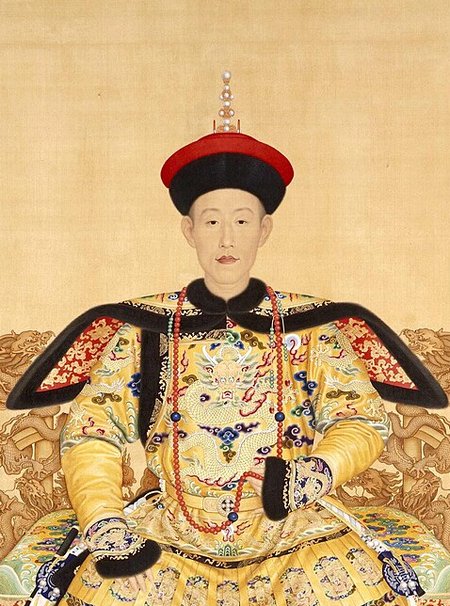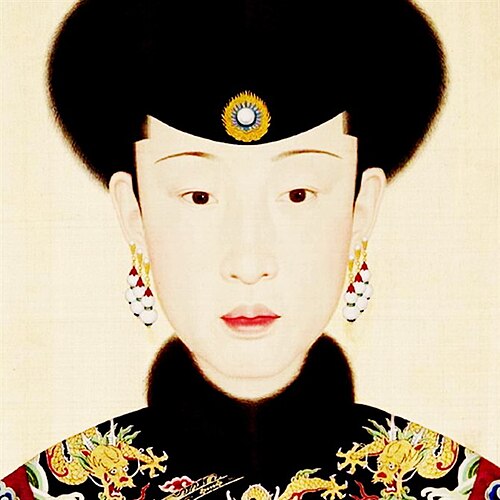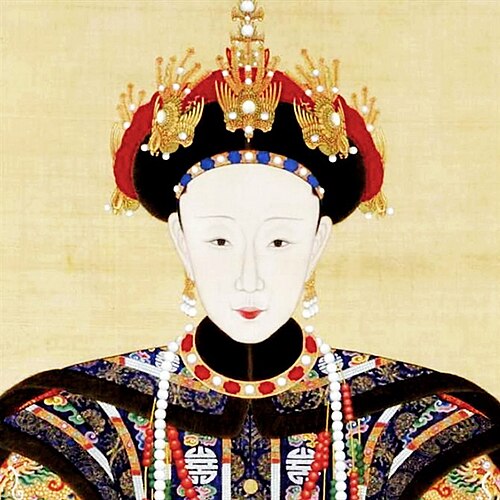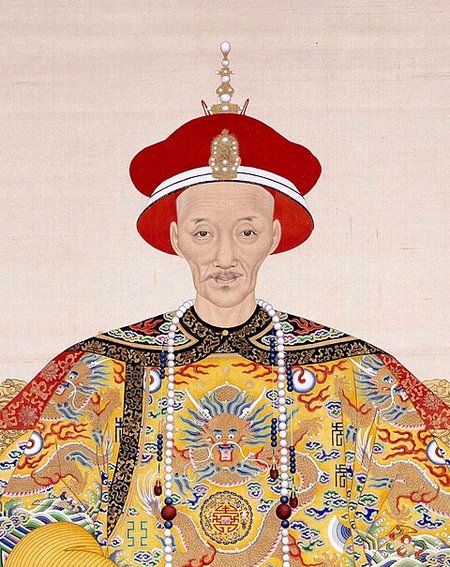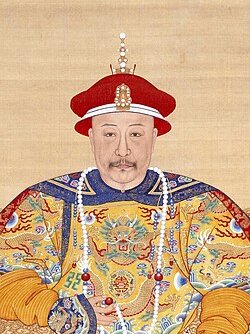
Jiaqing Emperor
November 13, 1760 – September 2, 1820
Sixth emperor of the Qing dynasty, reigning from 1796 to 1820, who purged his father's corrupt favourite Heshen and faced the White Lotus and Eight Trigrams uprisings.
Biography
Yongyan, the future Jiaqing Emperor, was born in 1760 at the Old Summer Palace near Beijing, the fifteenth son of the Qianlong Emperor by a consort of Han banner descent. His father secretly chose him as heir in 1773 and made him Prince Jia in 1789.
In February 1796 Qianlong abdicated in his favour so as not to reign longer than his grandfather Kangxi, but the old emperor kept real power until his death in 1799. Jiaqing then had his father's favourite Heshen tried for corruption and forced to take his own life, and launched reforms of the court, the civil service and the treasury, though historians doubt how much they changed.
His reign was troubled by the White Lotus and Miao rebellions, an empty treasury and, in 1813, the Eight Trigrams uprising, whose followers tried to storm the Forbidden City. He tried to curb opium smuggling, tightened the ban on Christian proselytising, and in 1816 dismissed the British Amherst Embassy when it refused to kowtow.
A devoted student of the Confucian classics, he is credited with thousands of poems. He died at the summer palace in Chengde in 1820 and was succeeded by his son, the Daoguang Emperor.
Offices held
Qianlong Emperor Succeeded by
Daoguang Emperor