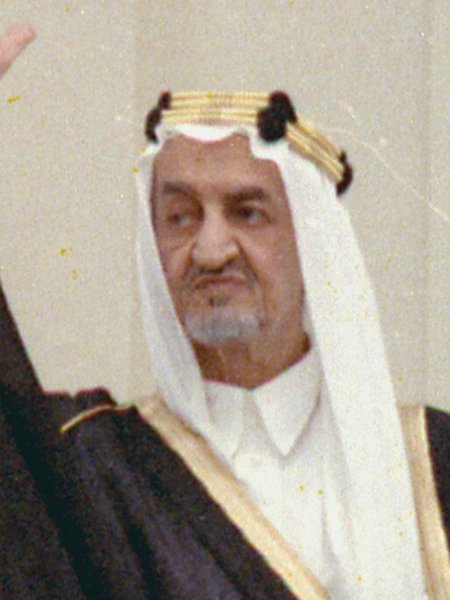
King Faisal bin Abdulaziz Al Saud
April 14, 1906 – March 25, 1975
King of Saudi Arabia from 1964 to 1975, who modernized the state and led the 1973 oil embargo; a nephew assassinated him.
Biography
Faisal bin Abdulaziz was born in Riyadh in 1906, the third son of Abdulaziz ibn Saud, founder of modern Saudi Arabia; his mother belonged to the Al ash-Sheikh family of religious scholars. He rose early, serving as viceroy of the Hejaz from 1926 to 1932 and as foreign minister from 1930, and he represented his father at the London Conference on Palestine, where he spoke against partition.
When his half-brother Saud became king in 1953, Faisal was named crown prince, and he served as prime minister for most of the following years. In 1962 he decreed the abolition of slavery in Saudi Arabia. A long power struggle with Saud ended in 1964, when senior royals and the grand mufti backed Faisal and Saud was persuaded to abdicate in his favour.
As king, Faisal pursued modernisation of the economy, education, health and transport while trying to limit the power of the religious establishment. His foreign policy rested on pan-Islamism, anti-communism and support for the Palestinians: he backed the royalists in the North Yemen civil war, convened the 1969 Rabat summit that created the Organisation of Islamic Cooperation, and led the 1973 oil embargo against Israel's Western backers. He was shot dead by his nephew Faisal bin Musaid in March 1975 and was succeeded by his half-brother Khalid.
Offices held
Saud of Saudi Arabia Succeeded by
Khalid of Saudi Arabia
Family
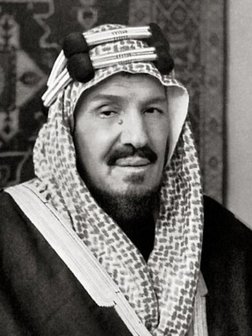 King Faisal bin Abdulaziz Al Saud


