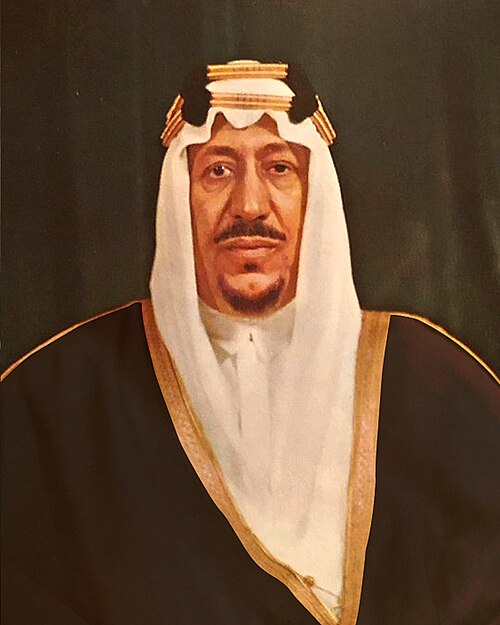
Saud of Saudi Arabia
January 15, 1902 – February 23, 1969
King of Saudi Arabia from 1953 until the royal family deposed him in favour of his brother Faisal in 1964.
Biography
Saud bin Abdulaziz was born in Kuwait City in 1902, the second son of Abdulaziz Al Saud, during the family's exile from Riyadh. After his elder brother Turki died in 1919, he was groomed as heir. He fought in his father's campaigns that created the Saudi state, served as viceroy of Nejd from 1926 to 1932 and represented his father abroad, and was named crown prince in May 1933.
As crown prince he took part in modernising the state's finances, preparing the first state budget in 1948 and helping establish the central bank in 1952, and launched a programme of administrative reforms. He became king on his father's death in November 1953 and established the practice of the king presiding over the Council of Ministers, enlarging the cabinet with new ministries and moving government departments to Riyadh.
Abroad Saud kept close ties with the United States while backing Egypt and other Arab states against Israel, declined to join the Baghdad Pact and brought the kingdom into the Non-Aligned Movement in 1961. At home, heavy spending and mounting debt led the royal family in 1958 to make him hand most executive power to his half-brother Faisal, and the two contested control of the government for years, with Saud briefly reclaiming the premiership in 1960-1962.
In March 1964, backed by the senior princes and the ulema, Faisal had Saud name him regent with full powers, and in November 1964 Saud was deposed and Faisal proclaimed king. Saud went into exile, living in Athens and for a time in Egypt under Nasser's protection, and made an unsuccessful bid with some of his sons to regain the throne. He died in Athens in February 1969.
Offices held
Ibn Saud Succeeded by
King Faisal bin Abdulaziz Al Saud
Family
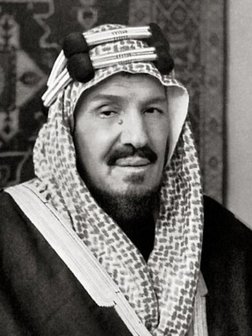 Saud of Saudi Arabia


