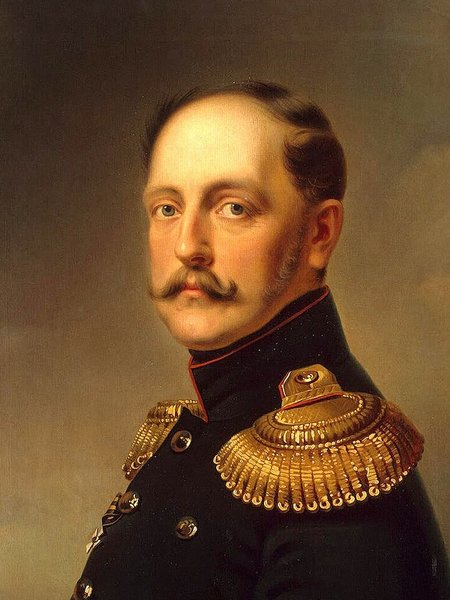
Nicholas I of Russia
Emperor of Russia from 1825 to 1855. He crushed the Decembrist revolt and the Polish uprising of 1830 and led Russia into the Crimean War.
Biography
Nicholas was born at Gatchina in 1796, the third son of Paul I, and was trained mainly as a soldier and military engineer. Few expected him to reign, but his brother Alexander I died without legitimate sons and the next brother, Constantine, had renounced the throne. In December 1825 Nicholas proclaimed his accession and at once put down the Decembrist revolt of liberal army officers.
His thirty-year reign became a byword for autocracy. He expanded the political police, curtailed local autonomies, and backed Sergey Uvarov's doctrine of Orthodoxy, Autocracy and Nationality as the guiding principle of the state. Crowned king of Poland in Warsaw in 1829, he crushed the November Uprising of 1830–1831 and replaced the Polish constitution with the Organic Statute of 1832.
Abroad he helped secure Greek independence, won wars against Persia and the Ottoman Empire in the late 1820s, signed the Treaty of Hünkâr İskelesi with the Ottomans in 1833, and sent troops to help Austria defeat the Hungarian revolution in 1849. His pressure on the Ottoman Empire led in 1853 to the Crimean War against Britain, France and the Ottomans, which went badly for Russia. Nicholas died in Saint Petersburg in March 1855, before the war ended.
Offices held
Alexander I of Russia Succeeded by
Alexander II of Russia
Alexander I of Russia Succeeded by
Alexander II of Russia
Family
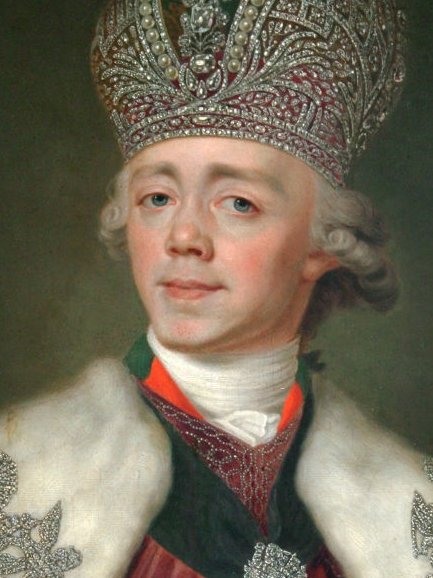
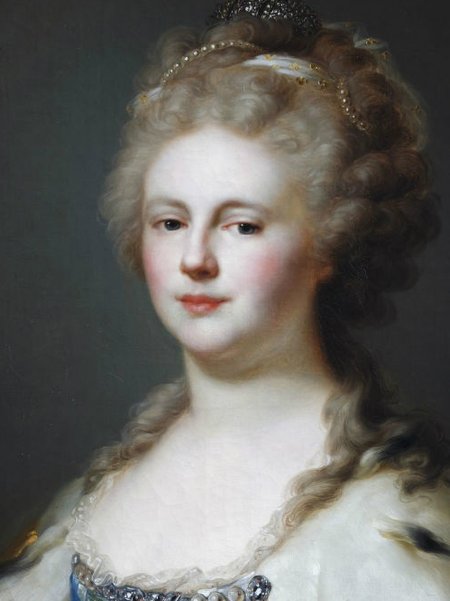 Nicholas I of Russia
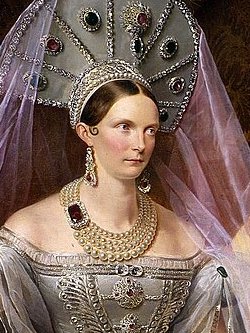 Alexandra Feodorovna (Charlotte of Prussia)
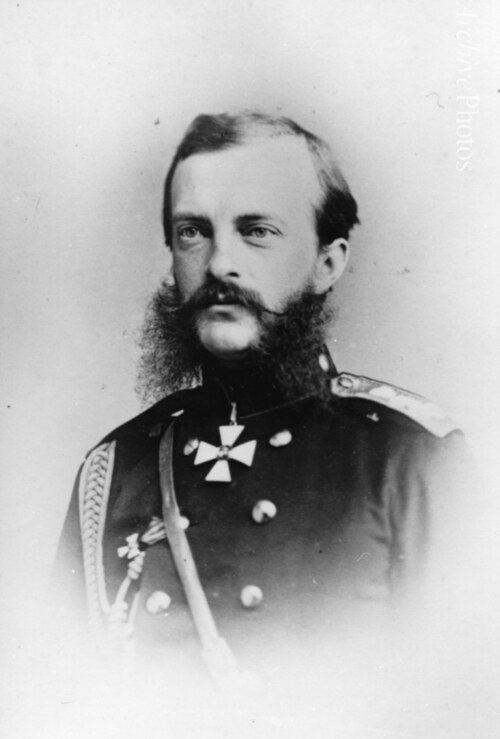 Grand Duke Michael Nikolaevich of Russia
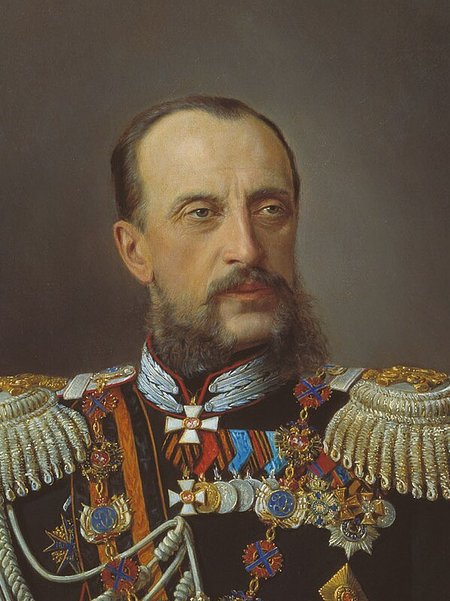 Grand Duke Nicholas Nikolaevich of Russia (born 1831)
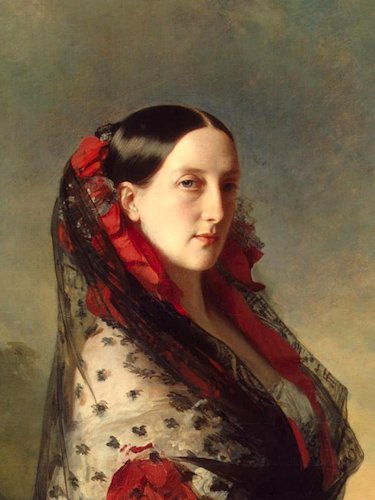 Grand Duchess Maria Nikolaevna of Russia, Duchess of Leuchtenberg
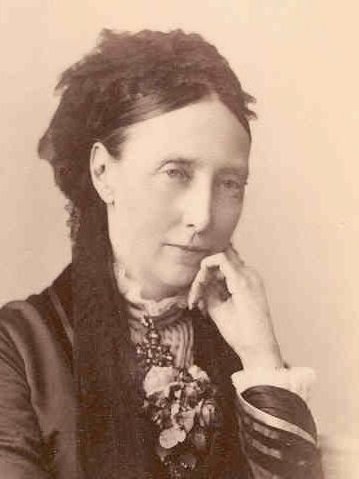 Olga Nikolaevna of Russia (1822–1892)
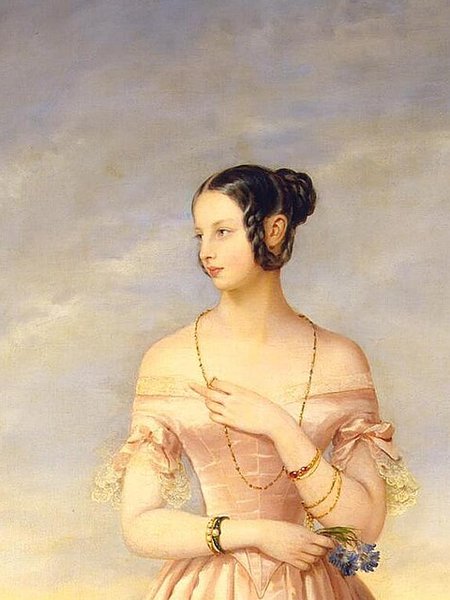 Grand Duchess Alexandra Nikolaevna of Russia
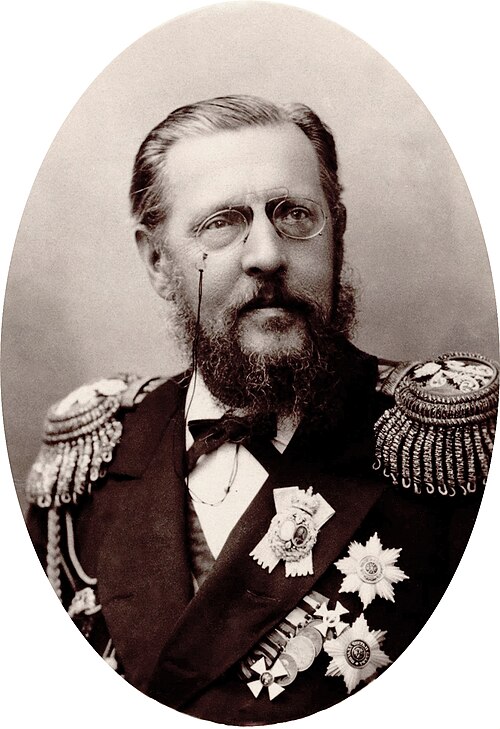 Grand Duke Konstantin Nikolayevich of Russia
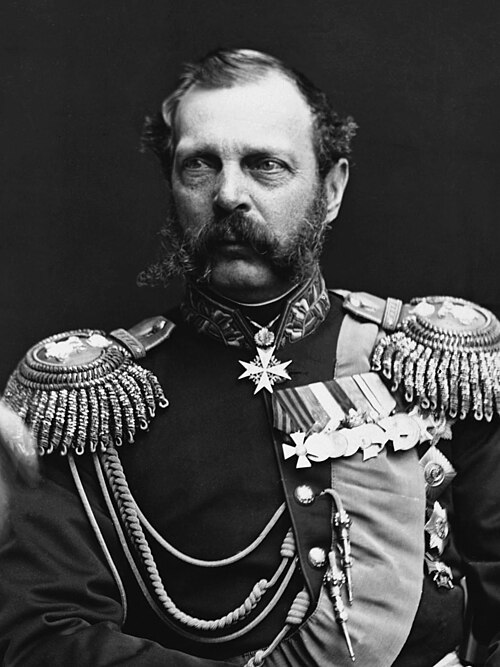 Alexander II of Russia


