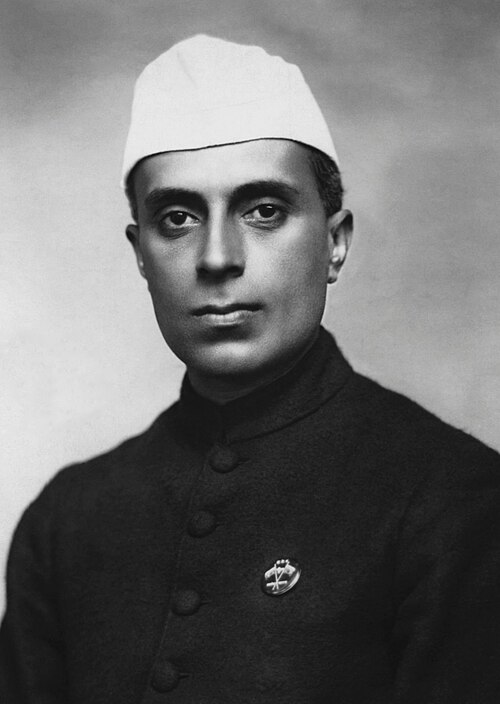
Jawaharlal Nehru
November 14, 1889 – May 27, 1964
Jawaharlal Nehru was an Indian lawyer, anti-colonial nationalist, and statesman who was a central figure in India in the mid-20th century. He was a principal leader of the Indian nationalist movement in the 1930s and 1940s and, upon independence in 1947, served as the country's first prime minister for over 16 years. He promoted parliamentary democracy, secularism, and science and technology, and in foreign affairs steered India clear of both blocs of the Cold War.
Biography
Jawaharlal Nehru was born in Allahabad in 1889 into a wealthy Kashmiri Brahmin family. He was educated at Harrow and Cambridge and trained as a barrister in London.
He joined the Indian National Congress, became a close follower of Gandhi, and spent about nine years in British prisons. As Congress president in 1929 he called for complete independence.
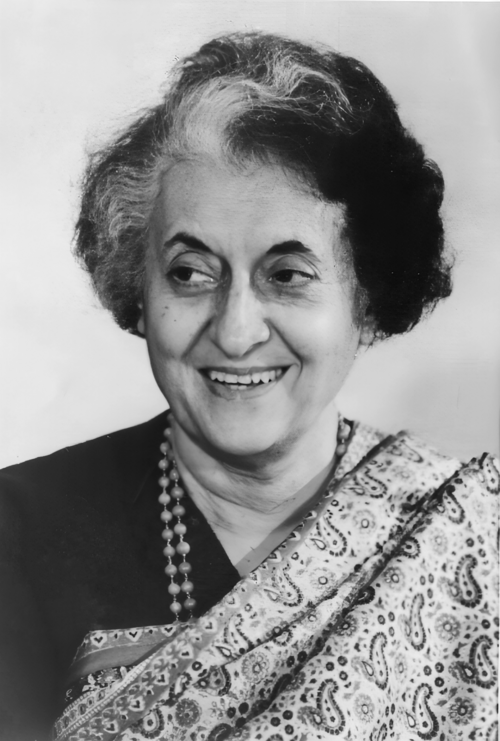
He became India's first prime minister in August 1947 and held the post until his death in 1964. He built a secular, democratic state with planned industrial growth, and led the Non-Aligned Movement in the Cold War. His government fought Pakistan over Kashmir and lost a border war with China in 1962. His daughter Indira Gandhi later became prime minister.
Offices held
Mahatma Gandhi Succeeded by
Subhas Chandra Bose
2 terms
- Dec 29, 1929 – Mar 21, 1931 Preceded by Mahatma Gandhi Succeeded by Sardar Vallabhbhai Patel
- Apr 12, 1936 – Feb 19, 1938 Preceded by Rajendra Prasad Succeeded by Subhas Chandra Bose
Affiliations
Education
- from Jan 1, 1905 Harrow School
- Trinity College, Cambridge
Party membership
- Jan 1, 1919 – May 27, 1964 Indian National Congress Joined 1919
Family
Jawaharlal Nehru