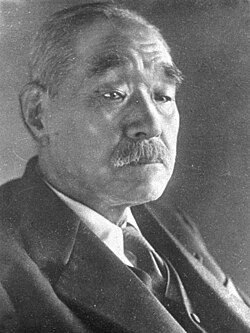
Kantarō Suzuki
January 18, 1868 – April 17, 1948
Japanese admiral and politician who was Prime Minister of Japan from April to August 1945 and led the government at Japan's surrender.
Biography
Kantaro Suzuki was born in 1868 in Izumi Province, the son of a local official, and grew up at Sekiyado. He graduated from the Imperial Japanese Naval Academy in 1887 and from the Naval Staff College, and became known as the navy's leading torpedo expert.
He commanded a torpedo boat in the First Sino-Japanese War and destroyer divisions in the Russo-Japanese War, including at Tsushima. He was naval attache in Germany, vice minister of the navy from 1914 to 1917, and after promotion to admiral in 1923 commanded the Combined Fleet and served as chief of the Navy General Staff from 1925 to 1929.
On retiring he became Grand Chamberlain to Emperor Hirohito and a privy councillor. Rebel officers shot and badly wounded him in the February 26 incident of 1936. He opposed war with the United States, was vice president of the Privy Council from 1940 and its president from 1944.
In April 1945, aged 77, he became prime minister, also holding the foreign and Greater East Asia portfolios for a few days. He dismissed the Potsdam Declaration with the word mokusatsu, but in August convened the imperial conferences at which Hirohito decided to surrender; military plotters tried to kill him during the Kyujo incident. He resigned on 17 August 1945, presided over the Privy Council again in 1945-46, and died in 1948.
Offices held
Kuniaki Koiso Succeeded by
Prince Naruhiko Higashikuni
Military service
- Imperial Japanese Navy
- Combined Fleet Commander
Affiliations
Education
- Jan 1, 1884 – Jan 1, 1887 Imperial Japanese Naval Academy 14th class of the Naval Academy, graduated 1887
Party membership
- Apr 7, 1945 – Jun 13, 1945 Imperial Rule Assistance Association


