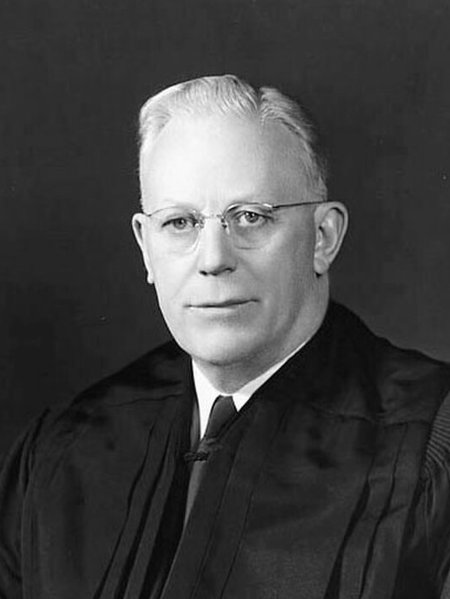
Earl Warren
American lawyer and politician who was governor of California from 1943 to 1953 and Chief Justice of the United States from 1953 to 1969, presiding over landmark civil-rights and criminal-procedure rulings.
Biography
Earl Warren was born in Los Angeles in 1891 to Scandinavian immigrant parents and grew up in Bakersfield. He studied political science and then law at the University of California, Berkeley, finishing his law degree in 1914. After a short stint at an oil company and a law firm, he enlisted in the Army during the First World War and spent it training troops in the United States.
Warren built his reputation as a prosecutor in Alameda County, joining the district attorney's office in 1920 and leading it from 1925 to 1939. He became a leading figure in the California Republican Party and was elected state attorney general in 1938. In that office he pressed hard for the wartime removal of Japanese Americans from the West Coast, a stance he later said he deeply regretted.
Elected governor of California in 1942, Warren won three consecutive terms and governed through a period of rapid growth. He was Thomas Dewey's running mate in the losing 1948 presidential campaign and sought the Republican nomination himself in 1952.
President Eisenhower named him Chief Justice of the United States in 1953. The Warren Court ended legal school segregation in Brown v. Board of Education, required equal-population electoral districts, set out the Miranda warnings for suspects and struck down bans on interracial marriage. Warren also chaired the commission that investigated the assassination of John F. Kennedy. He retired in 1969 and died in Washington in 1974.
Offices held
Culbert Olson Succeeded by
Goodwin Knight
Fred M. Vinson Succeeded by
Warren E. Burger
Military service
- Jan 1, 1917 – Jan 1, 1918 United States Army
Affiliations
Education
- Jan 1, 1908 – Jan 1, 1914 University of California, Berkeley BA in political science and LLB (1914), including the law department now Berkeley Law

