Mehmed V
November 2, 1844 – July 3, 1918
Penultimate sultan of the Ottoman Empire (1909-1918), a largely powerless constitutional monarch whose reign was dominated by the Committee of Union and Progress and saw the Balkan Wars and the Ottoman entry into the First World War.
Biography
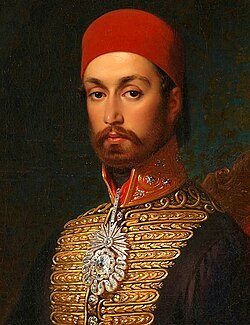
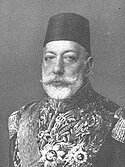
Mehmed Reşad was born at Çırağan Palace in Constantinople in 1844, a son of Sultan Abdulmejid I. He was educated within the palace, where he learned Arabic and Persian, took lessons in piano and calligraphy, and developed an interest in Persian literature and Mevlevi Sufism. When his half-brother Abdul Hamid II became sultan in 1876, Reşad was made heir but spent the next three decades under close watch in Dolmabahçe Palace, while keeping up a correspondence with exiled Young Turks.
He came to the throne on 27 April 1909, aged 65, after the 31 March Incident led to Abdul Hamid's deposition, and took the regnal name Mehmed V. Presented as a constitutional monarch, he had little real authority: the Committee of Union and Progress and its leaders dominated government, and he generally approved what they put before him. His nine-year reign saw three coups, eleven governments and repeated uprisings, together with the loss of Libya and the Dodecanese to Italy and of almost all remaining European territory in the First Balkan War.
After the Ottoman Empire entered the First World War on the side of the Central Powers, Mehmed formally proclaimed a jihad against the Entente on 14 November 1914, although he was said to dislike Enver Pasha's pro-German course. He hosted Kaiser Wilhelm II in Constantinople in 1917 and privately disapproved of his government's treatment of the Armenians, without effect. He died at Yıldız Palace on 3 July 1918, months before the war ended, and was succeeded by his brother Mehmed VI.