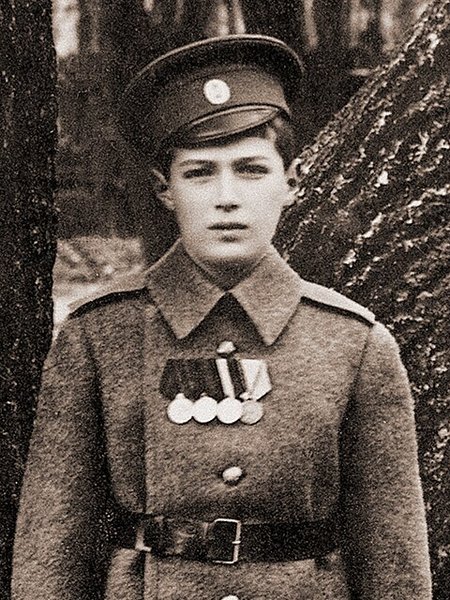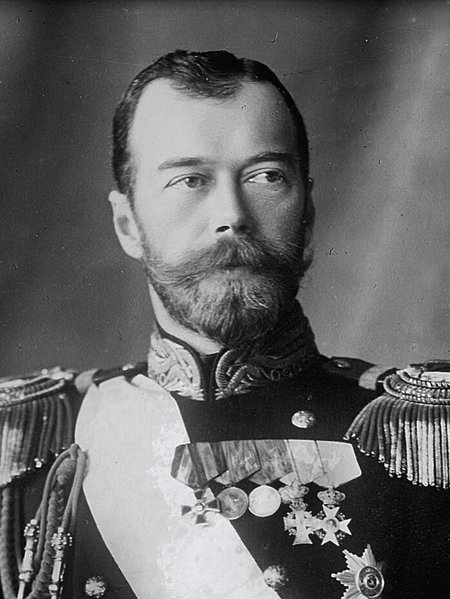
Nicholas II of Russia
Last Emperor of Russia, from 1894 until his abdication in the February Revolution of 1917. He and his family were killed by the Bolsheviks in 1918.
Biography
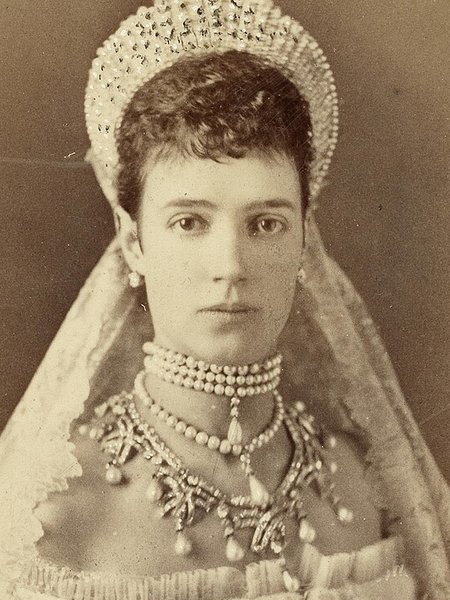
Nicholas II was born at Tsarskoye Selo in 1868, the eldest son of Alexander III and Maria Feodorovna. He was educated privately and trained for the army, and succeeded his father as emperor on 1 November 1894, shortly before marrying Alix of Hesse, who became Empress Alexandra. A stampede at Khodynka Field during the celebrations for his coronation in 1896 killed well over a thousand people and was taken as a bad omen.
Nicholas held firmly to autocracy. Abroad he kept up the alliance with France and proposed the Hague peace conference of 1899, but Russia's defeat by Japan in 1904-1905, together with the Bloody Sunday shootings, set off the Revolution of 1905. He was forced to issue the October Manifesto, which promised civil liberties and an elected Duma, but his government dissolved uncooperative Dumas, narrowed the franchise and kept ruling by emergency decree when it could.
His son Alexei's haemophilia drew the family to the healer Grigori Rasputin, whose influence discredited the court. The First World War brought heavy defeats and economic hardship, and in March 1917 the February Revolution forced him to abdicate, ending more than three centuries of Romanov rule.
Nicholas and his family were held by the Provisional Government and then by the Bolsheviks, who shot them in Yekaterinburg on 17 July 1918. Their remains were identified and reburied in 1998, and the Russian Orthodox Church canonised them as passion bearers in 2000.
Offices held
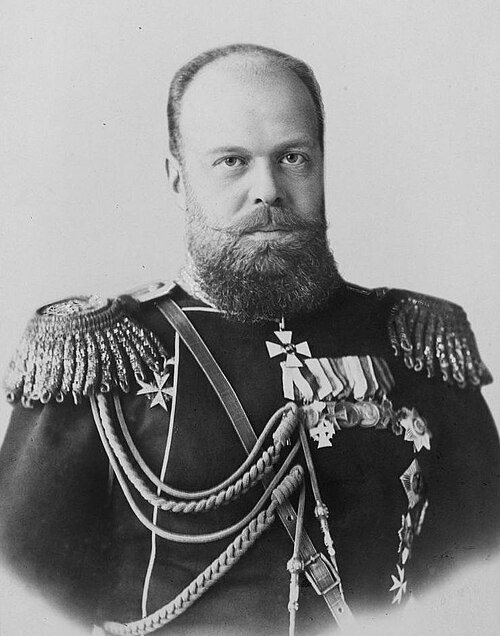
Alexander III of Russia Succeeded by
Grand Duke Michael Alexandrovich of Russia
Military service
Family
 Nicholas II of Russia
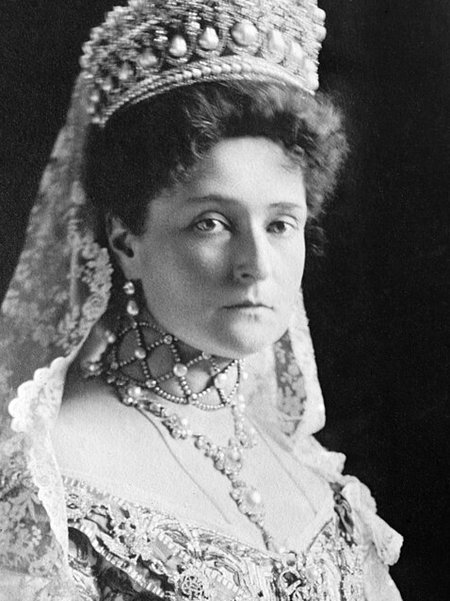 Alexandra Feodorovna of Russia