 Cold War
March 12, 1947 – December 26, 1991 · Era in the whole world
Related events
1940
1944
1948
1952
1956
1960
1964
1968
1972
1976
1980
1984
1988
1992
1996
 Cold War


Period of international geopolitical rivalry between the United States and the Soviet Union and their respective blocs, the capitalist Western Bloc and communist Eastern Bloc, from the aftermath of World War II to the Soviet dissolution in 1991. With no direct fighting between the superpowers, it was waged through proxy wars, a nuclear and conventional arms race, the Space Race, espionage, embargoes and crises such as the Berlin Blockade, the Korean War, the Cuban Missile Crisis and the Vietnam War. It ended as Mikhail Gorbachev's reforms contributed to the 1989 Eastern Bloc revolutions and the USSR's collapse in 1991.
Key people
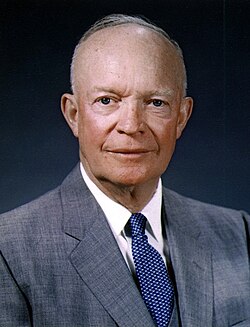 Dwight D. Eisenhower
President, United States · Western Bloc
Dwight D. Eisenhower
President, United States · Western Bloc
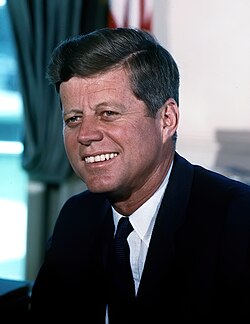 John F. Kennedy
President, United States · Western Bloc
John F. Kennedy
President, United States · Western Bloc
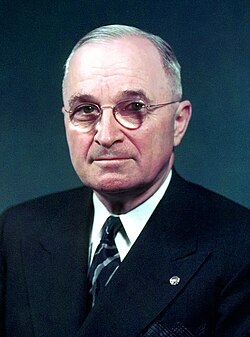 Harry S. Truman
President, Truman Doctrine and containment · Western Bloc
Harry S. Truman
President, Truman Doctrine and containment · Western Bloc
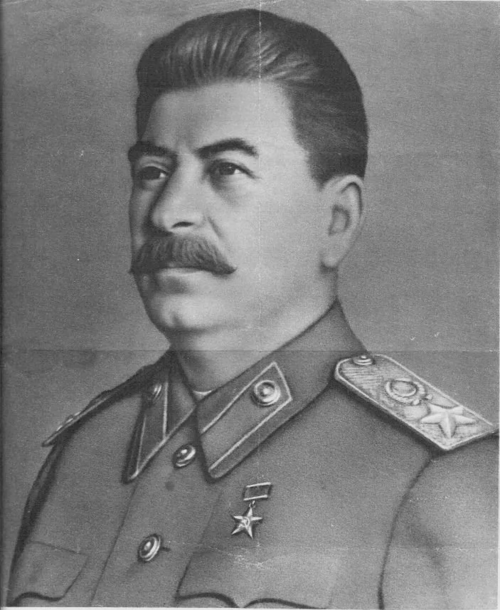 Joseph Stalin
General Secretary of Communist Party, Soviet Union · Eastern Bloc
Joseph Stalin
General Secretary of Communist Party, Soviet Union · Eastern Bloc
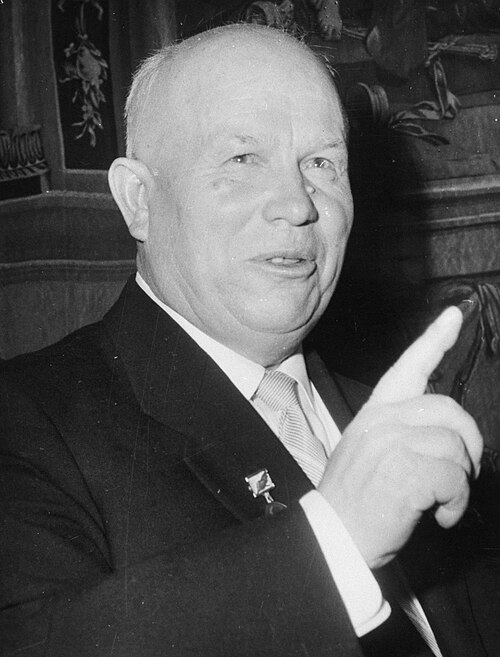 Nikita Khrushchev
General Secretary of Communist Party, Soviet Union · Eastern Bloc
Nikita Khrushchev
General Secretary of Communist Party, Soviet Union · Eastern Bloc
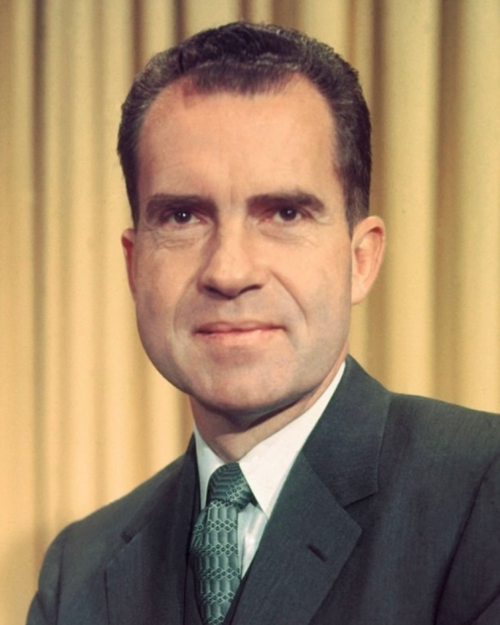 Richard Nixon
President, Détente; opening to China · Western Bloc
Richard Nixon
President, Détente; opening to China · Western Bloc
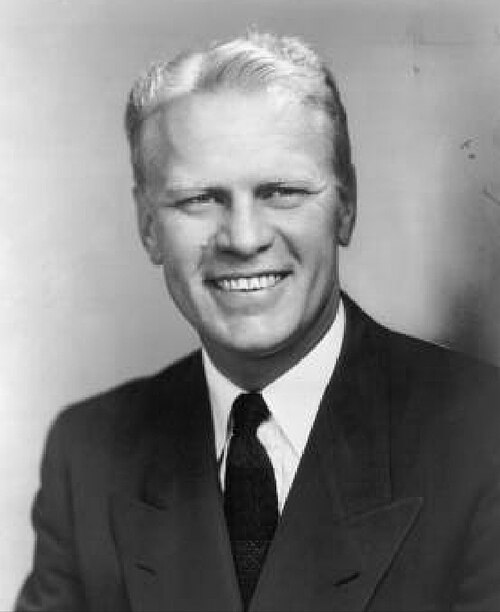 Gerald Ford
President · Western Bloc
Gerald Ford
President · Western Bloc
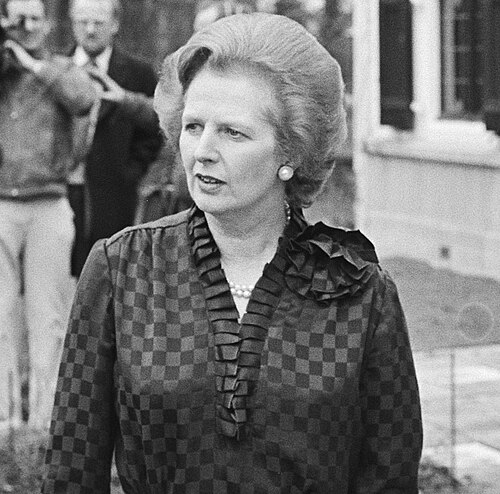 Margaret Thatcher
Prime Minister, United Kingdom · Western Bloc
Margaret Thatcher
Prime Minister, United Kingdom · Western Bloc
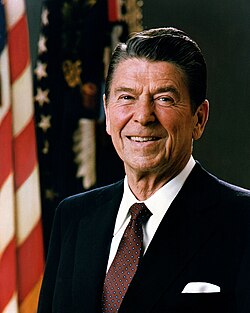 Ronald Reagan
President · Western Bloc
Ronald Reagan
President · Western Bloc
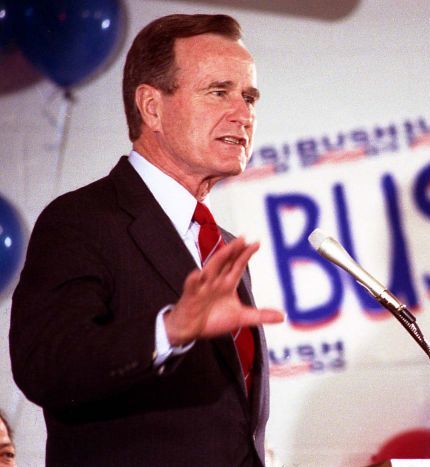 George H. W. Bush
President, In office as the Cold War ended · Western Bloc
George H. W. Bush
President, In office as the Cold War ended · Western Bloc
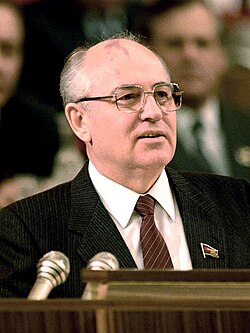 Mikhail Gorbachev
General Secretary of the CPSU, Reforms and the end of the Cold War · Eastern Bloc
Mikhail Gorbachev
General Secretary of the CPSU, Reforms and the end of the Cold War · Eastern Bloc
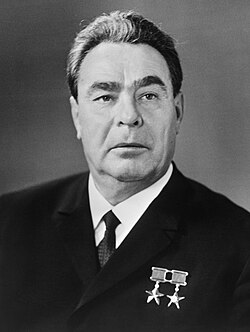 Leonid Brezhnev
General Secretary of the CPSU · Eastern Bloc
Leonid Brezhnev
General Secretary of the CPSU · Eastern Bloc
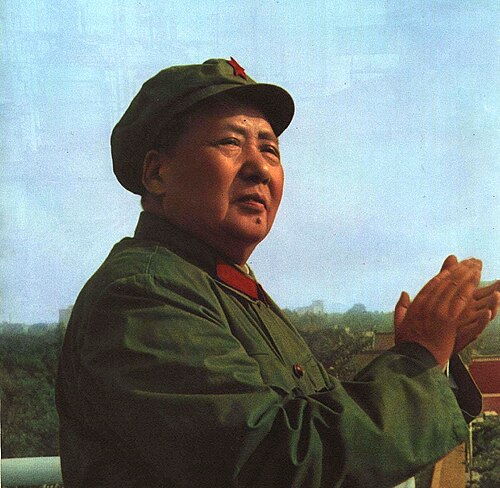 Mao Zedong
Chairman of the Chinese Communist Party · Eastern Bloc
Mao Zedong
Chairman of the Chinese Communist Party · Eastern Bloc
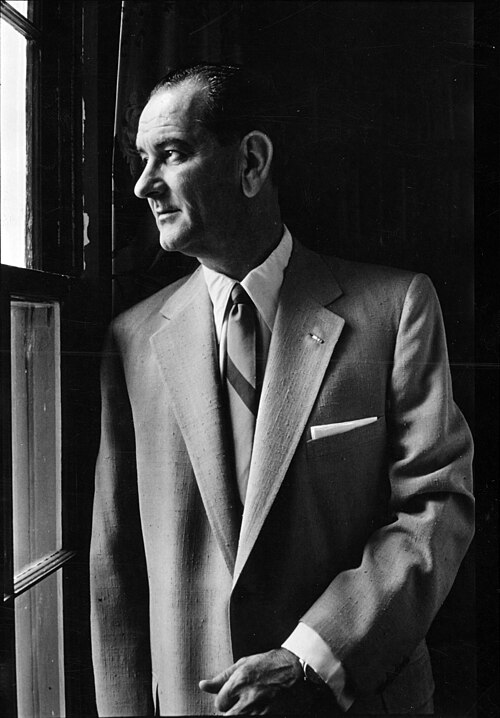 Lyndon B. Johnson
President · Western Bloc
Lyndon B. Johnson
President · Western Bloc
Participants
-
 United States
Western Bloc
United States
Western Bloc
-
 United Kingdom
Western Bloc
United Kingdom
Western Bloc
-
 France
Western Bloc
France
Western Bloc
-
 Germany
Western Bloc
Germany
Western Bloc
-
 NATO
Western Bloc
NATO
Western Bloc
-
 Soviet Union
Eastern Bloc
Soviet Union
Eastern Bloc
-
 People's Republic of China
Eastern Bloc
People's Republic of China
Eastern Bloc
-
 Cuba
Eastern Bloc
Cuba
Eastern Bloc
Battles and events 24
-
First Indochina War December 19, 1946 – August 1, 1954
- Battle of Route Coloniale 4 September 16 – October 18, 1950
- Battle of Hòa Bình November 10, 1951 – February 25, 1952
- Battle of Dien Bien Phu March 13 – May 7, 1954
- 1949 Syrian coup d'état March 29, 1949
- 1954 Guatemalan coup d'état June 18–27, 1954
-
Algerian War of Independence November 1, 1954 – March 19, 1962
- Toussaint Rouge November 1, 1954
- Philippeville massacre August 20–25, 1955
- Battle of Algiers (1956–1957) January 7 – October 8, 1957
- Challe Plan February 1, 1959 – April 1, 1961
- Sino-Soviet split 1956 – 1966
- Hungarian Revolution of 1956 October 23 – November 10, 1956
- Suez Crisis October 29 – November 7, 1956
- Laotian Civil War May 23, 1959 – December 2, 1975
-
Congo Crisis July 5, 1960 – November 25, 1965
- Assassination of Patrice Lumumba January 17, 1961
- Bay of Pigs Invasion April 17–20, 1961
- Sino-Indian War October 20 – November 21, 1962
- Partial Nuclear Test Ban Treaty August 5, 1963
- Cambodian Civil War March 11, 1967 – April 17, 1975
-
Bangladesh War of Independence March 26 – December 16, 1971
- Battle of Garibpur November 20–21, 1971
- Battle of Hilli November 22 – December 18, 1971
-
Indo-Pakistani War of 1971 December 3–16, 1971
- Battle of Garibpur November 20–21, 1971
- Battle of Hilli November 22 – December 18, 1971
- Battle of Longewala December 4–7, 1971
- Battle of Basantar December 4–16, 1971
- Operation Trident (1971) December 4–5, 1971
- Pakistani Instrument of Surrender December 16, 1971
- Nixon's visit to China February 21–28, 1972
- Helsinki Accords August 1, 1975
- Angolan Civil War November 11, 1975 – April 4, 2002
- Mozambican Civil War May 30, 1977 – October 4, 1992
- Cambodian–Vietnamese War December 21, 1978 – September 26, 1989
- Sino-Vietnamese War February 17 – March 16, 1979
- Reykjavík Summit October 11–12, 1986
- Intermediate-Range Nuclear Forces Treaty December 8, 1987
- 1989 Tiananmen Square protests and massacre April 15 – June 4, 1989
- Romanian Revolution December 16–27, 1989
Also involved 22
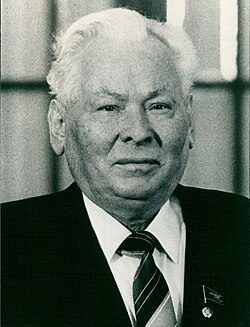 Konstantin Chernenko
General Secretary of the CPSU · Eastern Bloc
Konstantin Chernenko
General Secretary of the CPSU · Eastern Bloc
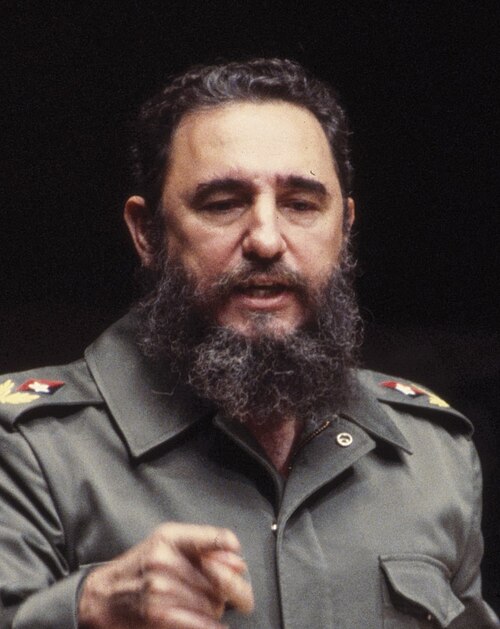 Fidel Castro
Leader of Cuba · Eastern Bloc
Fidel Castro
Leader of Cuba · Eastern Bloc
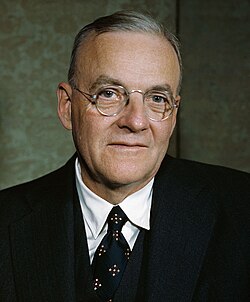 John Foster Dulles
Secretary of State · Western Bloc
John Foster Dulles
Secretary of State · Western Bloc
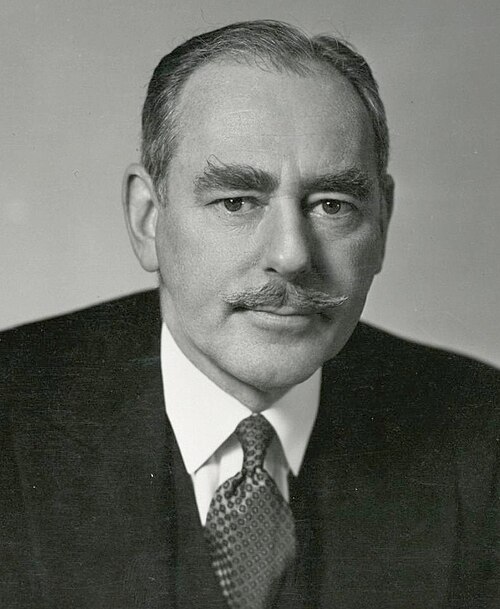 Dean Acheson
Secretary of State, Shaped containment and NATO · Western Bloc
Dean Acheson
Secretary of State, Shaped containment and NATO · Western Bloc
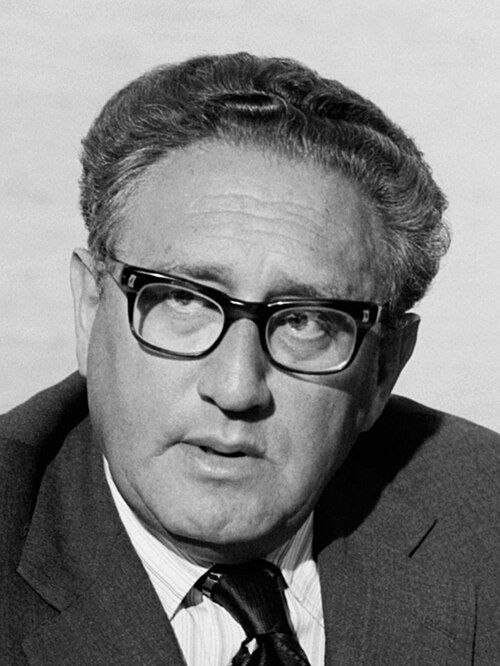 Henry Kissinger
National Security Advisor and Secretary of State, Détente · Western Bloc
Henry Kissinger
National Security Advisor and Secretary of State, Détente · Western Bloc
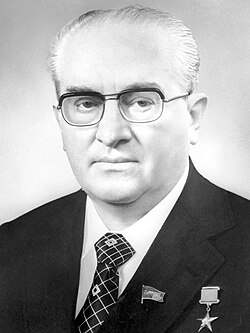 Yuri Andropov
General Secretary of the CPSU · Eastern Bloc
Yuri Andropov
General Secretary of the CPSU · Eastern Bloc
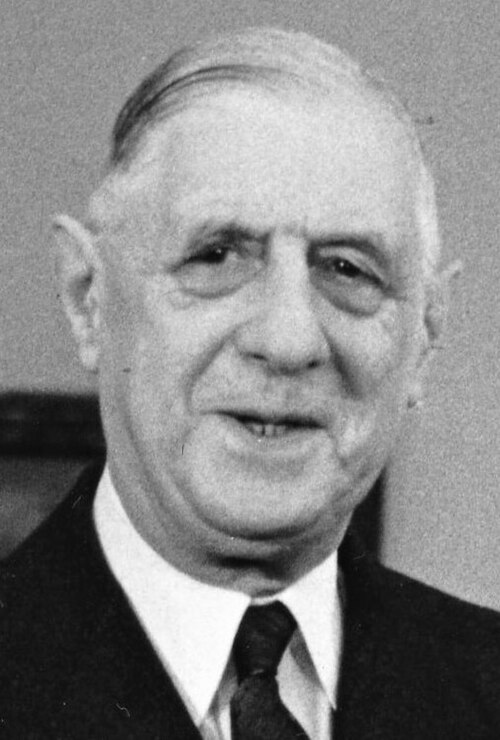 Charles de Gaulle
President of France · Western Bloc
Charles de Gaulle
President of France · Western Bloc
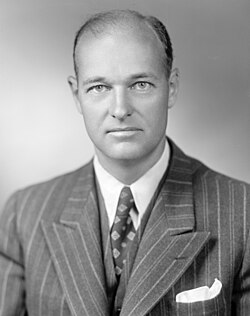 George F. Kennan
Diplomat, Author of the Long Telegram and the containment doctrine · Western Bloc
George F. Kennan
Diplomat, Author of the Long Telegram and the containment doctrine · Western Bloc
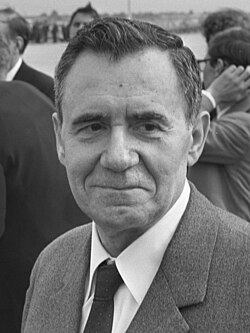 Andrei Gromyko
Foreign Minister of the Soviet Union · Eastern Bloc
Andrei Gromyko
Foreign Minister of the Soviet Union · Eastern Bloc
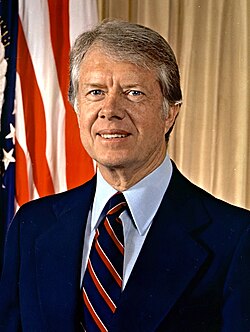 Jimmy Carter
President · Western Bloc
Jimmy Carter
President · Western Bloc
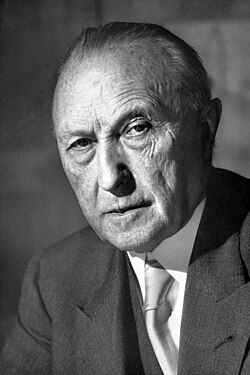 Konrad Adenauer
Chancellor of West Germany · Western Bloc
Konrad Adenauer
Chancellor of West Germany · Western Bloc
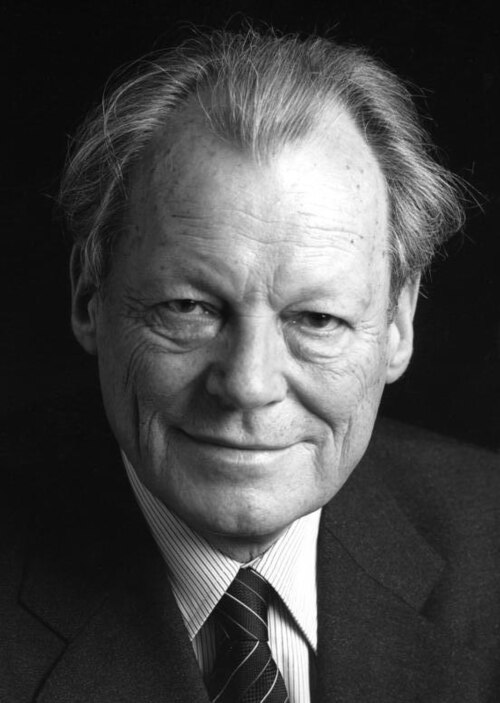 Willy Brandt
Chancellor of West Germany, Ostpolitik · Western Bloc
Willy Brandt
Chancellor of West Germany, Ostpolitik · Western Bloc
 Helmut Kohl
Chancellor of Germany, German reunification · Western Bloc
Helmut Kohl
Chancellor of Germany, German reunification · Western Bloc
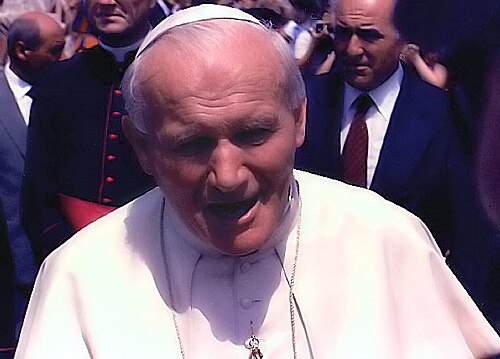 John Paul II
Pope, Supported Solidarity in Poland
John Paul II
Pope, Supported Solidarity in Poland
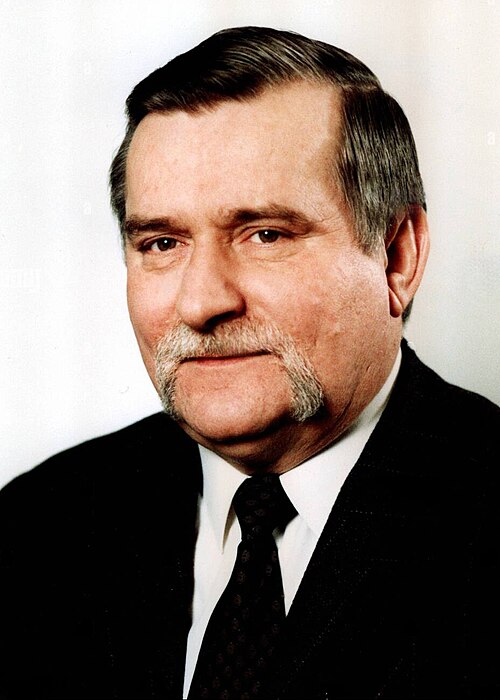 Lech Wałęsa
Leader of Solidarity
Lech Wałęsa
Leader of Solidarity
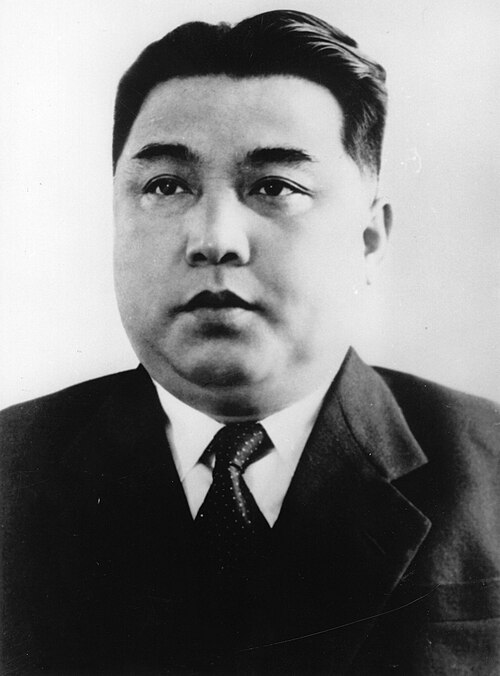 Kim Il-sung
participant · Eastern Bloc
Kim Il-sung
participant · Eastern Bloc
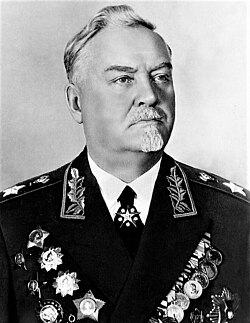 Nikolai Bulganin
participant · Eastern Bloc
Nikolai Bulganin
participant · Eastern Bloc
 Charles P. Cabell
participant · Western Bloc
Charles P. Cabell
participant · Western Bloc
 Frederick M. Franks Jr.
participant · Western Bloc
Frederick M. Franks Jr.
participant · Western Bloc
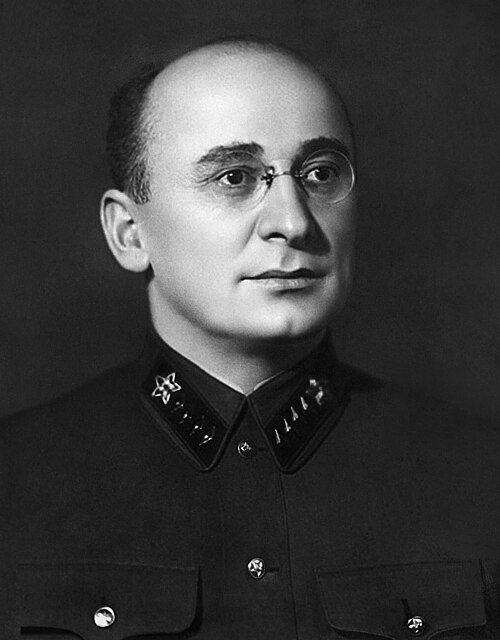 Lavrentiy Beria
participant
Lavrentiy Beria
participant
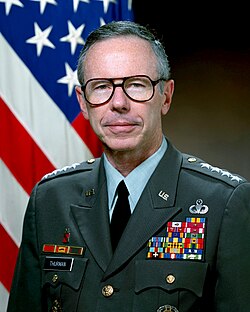 Maxwell R. Thurman
participant · Western Bloc
Maxwell R. Thurman
participant · Western Bloc
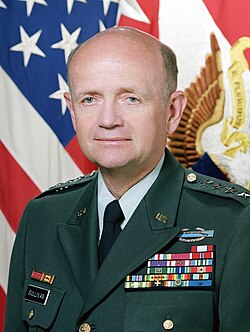 Gordon R. Sullivan
participant
Gordon R. Sullivan
participant